

There comes a moment, usually somewhere between the sixth and eighth birthday, when your little one looks up from their sums and says something like, ‘Mumma, what’s 23 times 4?’ And just like that, you realise you have entered the world of bigger math.
It can feel like a leap. One minute you are counting grapes into bowls, the next you are staring at two-digit numbers and wondering how to explain them without turning it into a math lesson. But here is the truth : 2-digit multiplication does not need to be scary. It can be gentle, familiar, and even a little bit fun, especially when it’s wrapped in real-life moments.
This blog is part of our 3H-powered learning series, where Heart, Head and Hand come together to make math feel like home. It also introduces our new eBook, created especially for families with kids aged 6 to 8.

 HEART : Start with Safety, Not Speed
When it comes to 2-digit multiplication, many kids do not struggle with the numbers themselves; they struggle with how those numbers make them feel. Big numbers can feel unfamiliar, even a little frightening. And when a kid feels unsure, the best thing we can offer is not a shortcut or a formula, but a story.
One mumma, Claire, with her son, Noah, was working through his homework at the kitchen table. He paused at 13 × 2, pencil hovering, eyebrows frowned. ‘I do not know how to do this,’ he said softly.
Claire did not correct him. She did not reach for a calculator. Instead, she told him a story.
‘Imagine you have 13 apples,’ she said. ‘Ten in one basket, and three in another. Now imagine you have two of those baskets. How many apples altogether?’
Noah’s eyes lit up. ‘10 times 2 is 20. 3 times 2 is 6. So… 20 plus 6 is 26.’
He looked up, surprised. ‘I did it.’
That is the Heart of learning. Not rushing. Not memorising. Just helping a kid feel safe enough to explore, and proud enough to keep going.
Our new eBook is built around this very idea. It brings together stories, gentle explanations and everyday examples to help families make sense of 2-digit multiplication in a way that feels familiar and warm. With the 3H approach…Heart, Head and Hand. It turns math into something your kid can feel, understand and do.
Explore the eBook today, and let the story lead the learning.

 HEAD : Let Them Think It Through, Slowly
When kids first meet 2-digit multiplication, it’s not the numbers that trip them up; it’s the feeling that they are supposed to know something they have not quite figured out yet. That is where a good worksheet can help. Not the kind that rushes them to the answer, but the kind that walks beside them, step by step.
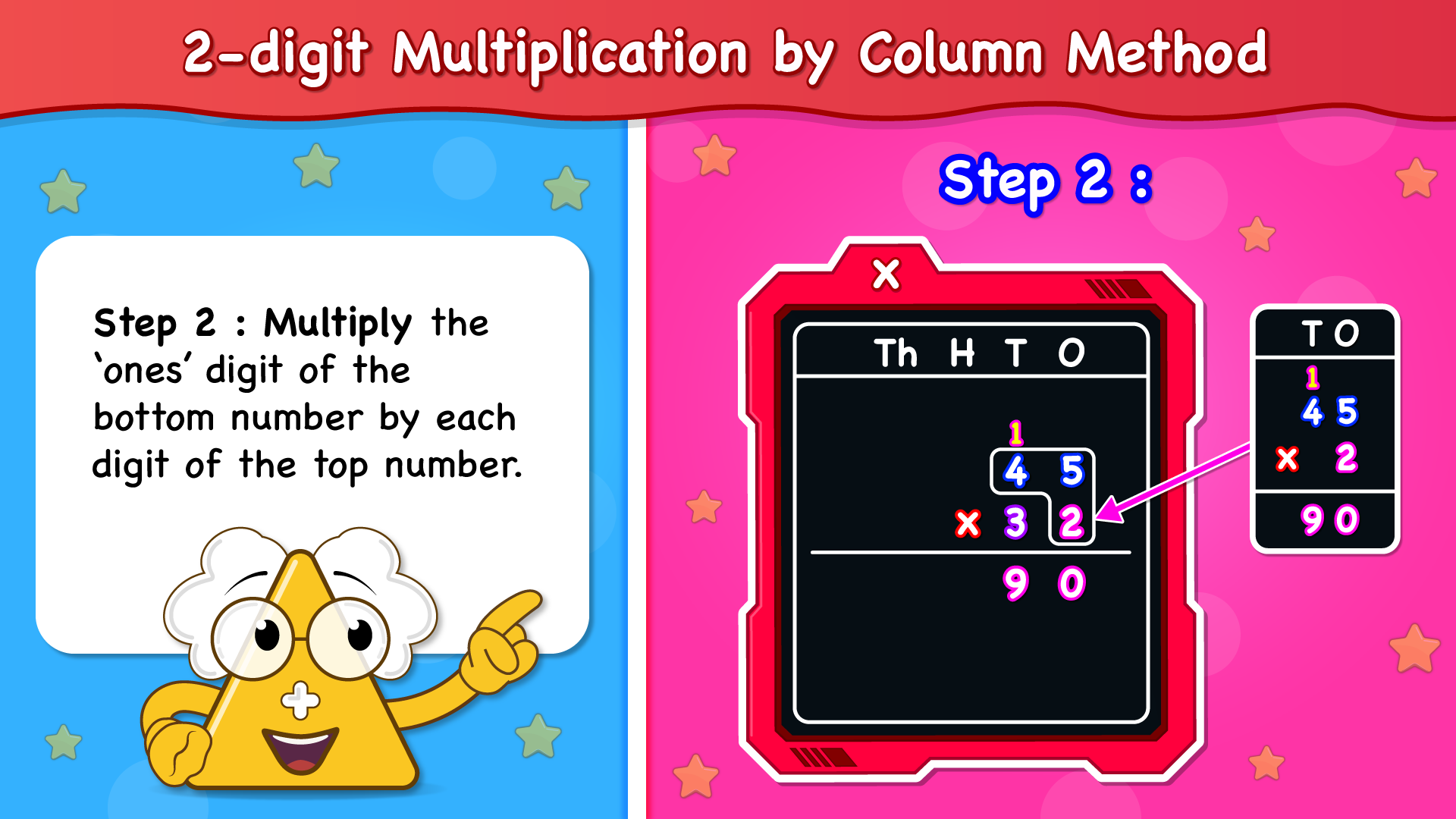
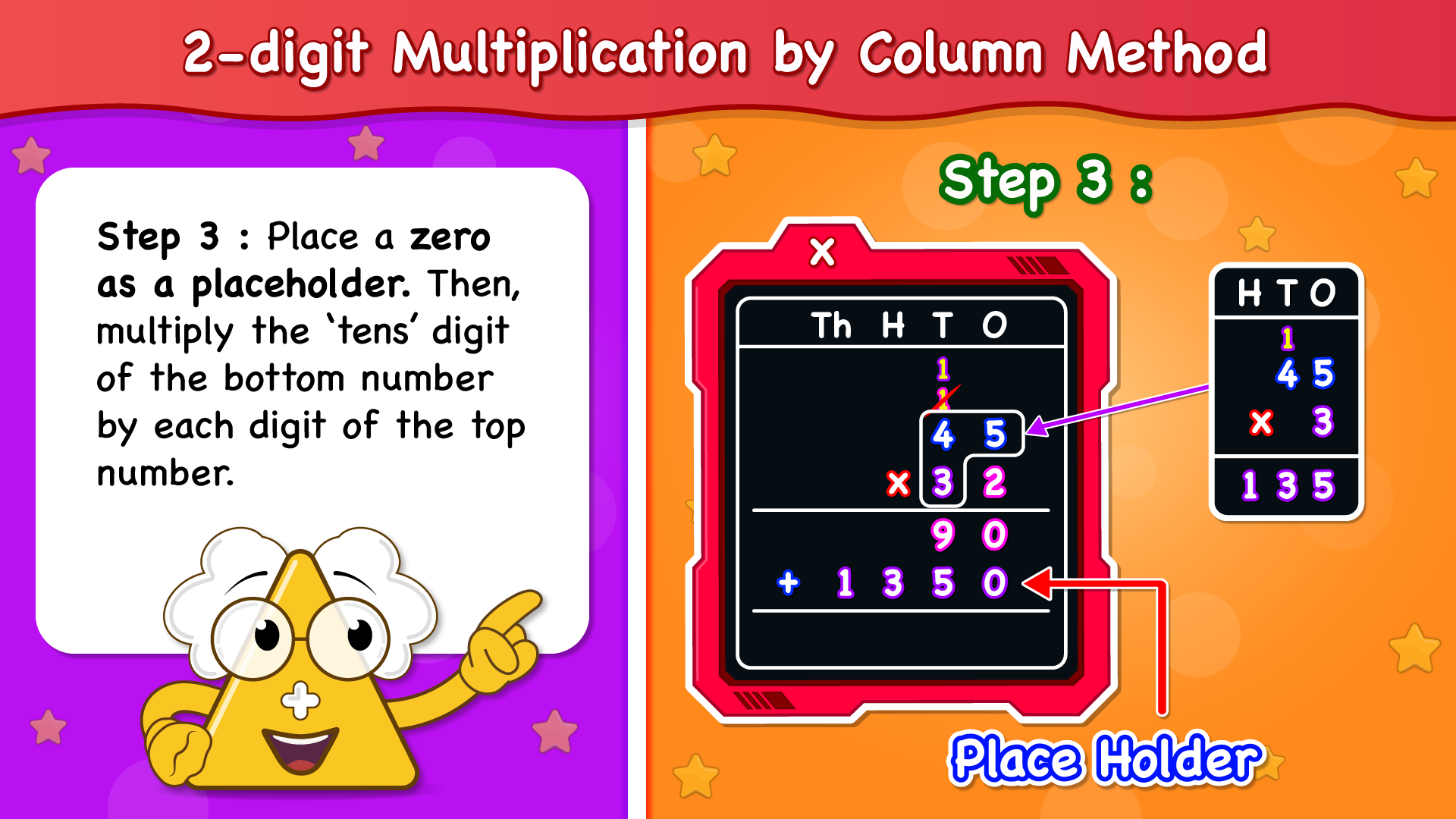
Take 23 × 4. A thoughtful worksheet will gently guide your kid to split 23 into 20 and 3. Then it will help them work through :
- 20 × 4 = 80
- 3 × 4 = 12
- 80 + 12 = 92
No tricks. No shortcuts. Just clear steps and space to think.
Even my daughter, Myra, liked to colour-code her work, blue for the tens, red for the ones. ‘It feels like I’m painting the answer,’ Lily said one afternoon, as she worked through 34 × 2. That is the Head part of learning : helping kids see the structure, feel the rhythm, and enjoy the process.
At Uncle Math Lab, we design worksheets just like this, gentle, visual, and designed to build confidence. They do not just teach the method. They help your kid understand why it works.


 HAND : Let Them Feel It in Their Fingers
Some kids need to move. To touch. To build. That is how they make sense of numbers, not by staring at them, but by playing with them.
Rosie helped her son, Ben, who was struggling with 14 × 3. So she gave him 14 toy cars and three empty boxes. ‘Can you pack them?’ she asked. He started sorting, one car at a time. By the end, he had grouped them, counted them, and smiled. ‘That’s 42,’ he said. No worksheet. No pressure. Just hands-on learning.
Here are a few simple ways to bring multiplication into everyday life :
- Grocery math : ‘We are buying 12 apples, and each costs $2. How much will it cost?’ Let your kid use coins or draw baskets.
- Toy sorting : ‘We have 14 toy cars, and each box holds 3. How many cars altogether?’ Use real toys if you can.
- Draw it out : Let your kid sketch rows and columns. It helps them see the math, not just hear it.
These moments do more than teach multiplication. They build confidence. They show your kid that learning is something they can do with their own hands.

At Uncle Math Lab, we have planned activities like these, simple, playful, and rooted in everyday family life. Whether it’s sorting socks, baking cupcakes, or counting coins, our Hands-on approach helps kids learn by doing.
Explore our eBook today and discover worksheets and activities that make 2-digit multiplication feel like home, with Heart, Head and Hand.
A Quiet Word for Parents
2-digit multiplication can feel like a big step. But it does not need to be rushed. You do not need fancy tools or strict routines. What matters most is your voice, your presence, and your willingness to learn side by side.
Our eBook is here to help. It’s full of gentle explanations, real stories and simple activities that fit into family life. It brings the 3H approach of Heart, Head and Hand to life in a way that feels natural and comforting.
So next time your little one says, ‘This number’s too big,’ you might say, ‘Let’s break it down together and see what we find.’
Explore our eBook today and make 2-digit multiplication feel like home with Heart, Head and Hand.

