
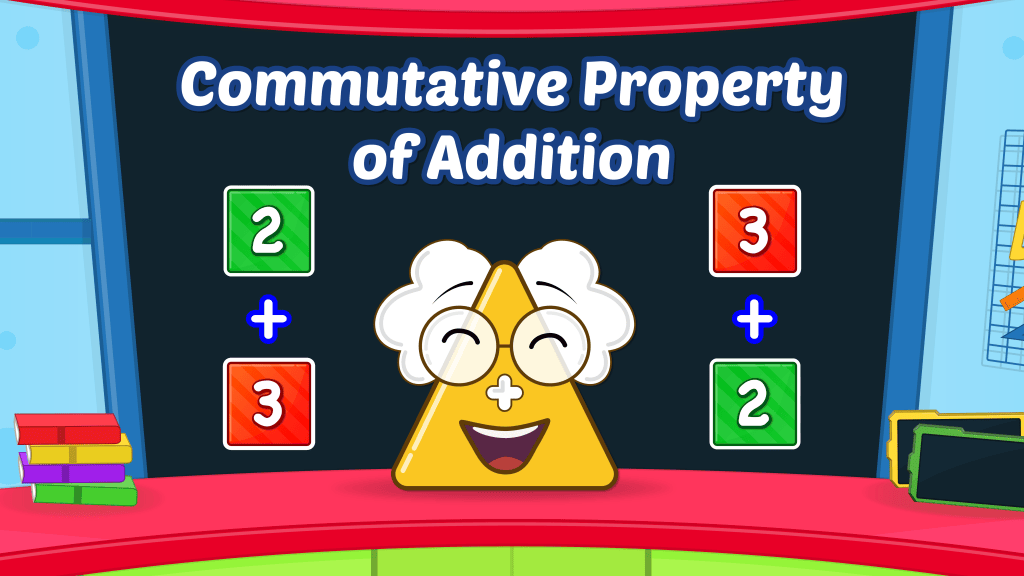
There’s a quiet kind of joy in watching your kid discover that numbers aren’t as rigid as they seem. One morning, while folding laundry, I overheard a little voice from the living room: ‘Mumma, three plus seven is ten… and seven plus three is also ten! That’s funny, they swapped places!’
It was my niece, giggling over her workbook, as if the numbers had played a little trick. That moment, simple, playful, and full of wonder is the commutative property of addition in action.
At Uncle Math Lab, we believe math should feel like home. That’s why our eBook, powered by the 3H approach of Heart, Head and Hand, helps families explore foundational math ideas through stories, clear thinking and hands-on play. Let’s walk through this property together not as a lesson, but as a shared experience between you and your kid.

 HEART : When Numbers Swap Places in Everyday Life
I remember my son, Andy, was helping me make fruit salad. He added two slices of banana and five grapes to a bowl. Then he paused, picked up the grapes first and said, ‘Five grapes and two bananas… still seven!’ I smiled and said, ‘That’s math, right there in the fruit bowl.’
Even my daughter Meera, was counting her soft toys before bedtime. She had four teddies and six bunnies. ‘Four plus six is ten,’ she said. Then she swapped them. ‘Six plus four is also ten!’ ‘It’s like they are best friends,’ she added, hugging them both.
These moments aren’t about memorising rules, They are about noticing patterns in the middle of life. That’s the Heart of learning : warm, familiar, and rooted in real experiences.
Try this at home :
- Let your kid add two groups of toys, then swap the order and see what happens.
- Use snack time to explore combinations, biscuits first, grapes next… or the other way round.
- Celebrate their discoveries with gentle encouragement, not correction.
 HEAD : Thinking Clearly About Number Order
Once the idea feels familiar, it’s time to build the thinking. Our eBook offers simple, parent-friendly prompts that help kids practise the commutative property in a way that feels like solving a puzzle, not sitting a test.
For example :
- 3 + 7 = 10
- 7 + 3 = 10
- 12 + 5 = 17
- 5 + 12 = 17
My sister’s son, Rosh, loved spotting ‘flip sums’. He’d say, ‘This one’s flipped, but it still works!’ That’s the Head at work , noticing patterns, testing ideas and feeling proud.
Inside the eBook, you’ll find :
- Visual prompts that show numbers swapping places in playful ways.
- Practice pages that gently reinforce the idea without overwhelming.Short stories where characters discover the joy of number order through everyday adventures.
And for parents, it’s a chance to sit beside your kid — not as a teacher, but as someone who’s curious with them.

 HAND : Doing It Together with Hands-On Play
The commutative property becomes real when kids can touch, move and build numbers. That’s where the Hand part of our approach shines.
I remember my daughter, Tara, was playing with building blocks. She had five yellow and two green. ‘Five plus two is seven,’ she said. Then she picked up the green ones first. ‘Two plus five is also seven!’ I said, ‘She didn’t even realise she was doing math, she was just building.’
Here are a few activities to try :
- Toy Sorting : Place toys in two piles. Let your kid add them, then swap the piles and add again.
- Snack math : Give your kid three biscuits and four grapes. Ask them to add in both orders.
- Story Time : Invent a tale where a character finds coins, buttons or apples in different orders — and still ends up with the same total.
These activities help kids feel the numbers. They turn abstract ideas into something they can hold, sort and explain.

Our eBook: Powered by 3H Tools?
Our eBook on the commutative property of addition is more than just a resource — it’s a companion for families. Every page is shaped with the Heart of storytelling, the Head of clear thinking and the Hand of hands-on discovery.
Whether you’re counting crayons, stacking blocks or solving sums at the kitchen table, our 3H-powered tools are designed to fit into your life and make learning feel familiar, joyful and deeply connected.
Because when math feels like home, every number becomes a moment of understanding.

