
One quiet afternoon, my friend Sarah was tidying up the living room while her six-year-old son, Ben, was stacking board games and tissue boxes into a wobbly tower. He paused, looked at the pile, and asked, ‘Mom, is this a cuboid?’ She smiled, sat beside him, and said, ‘Yes, it is and so is the cereal box, your storybook, and even the microwave.’
That moment stayed with me. It was not about ticking off a math topic; it was about a kid noticing something in his world and a parent gently guiding him. At Uncle Math Lab, we believe that is where real learning begins. Our eBooks, designed for kids aged 6 to 8, use the 3H approach of Heart, Head and Hand to help families explore math through stories, thinking, and play.
Let us explore the world of cuboids together, just as a parent might, with warmth, curiosity, and everyday wonder.
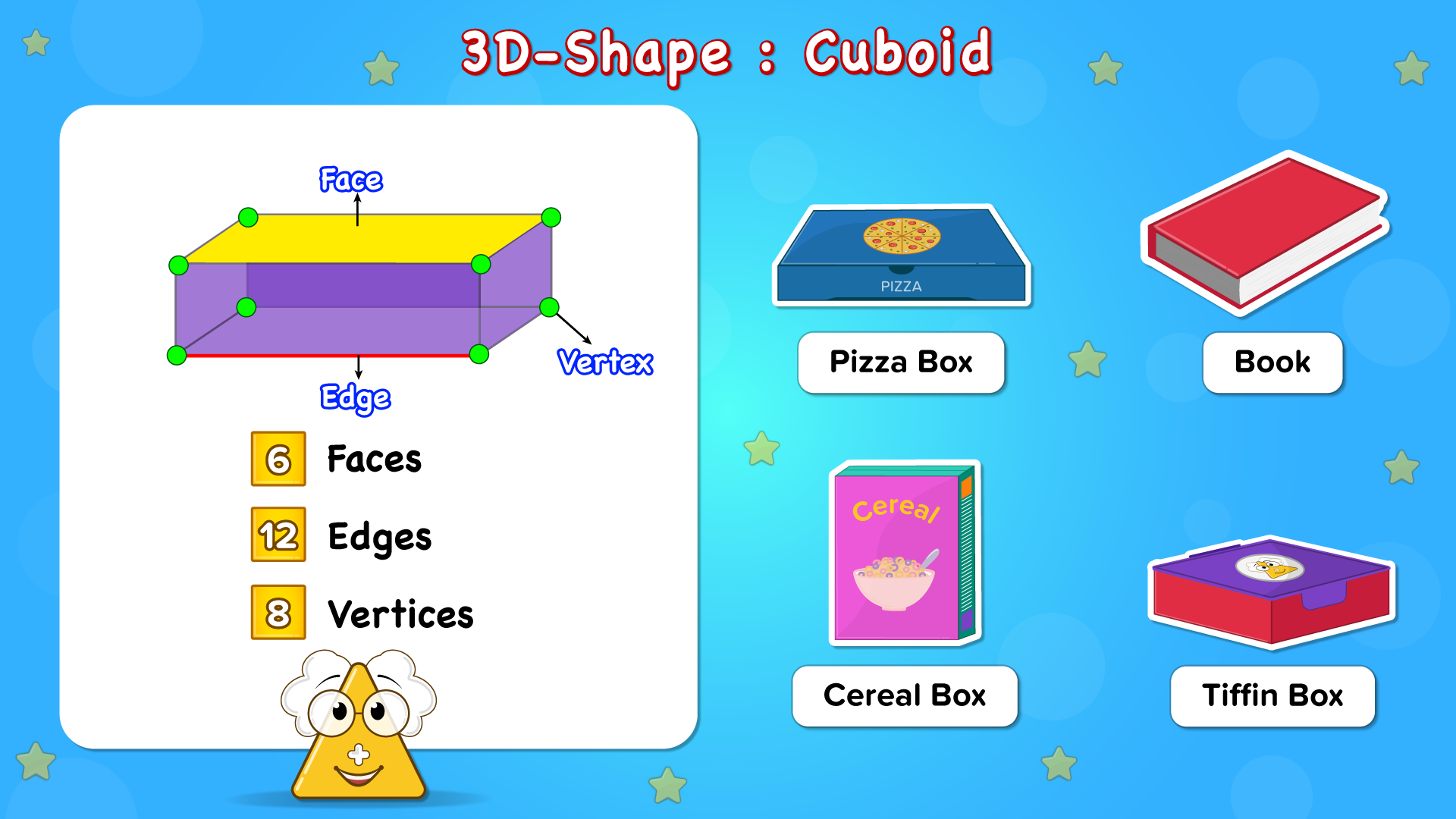
A cuboid is a three-dimensional shape that resembles a box. It has six flat faces, and each face is a rectangle. You will find cuboids all around your home—books, bricks, lunchboxes, drawers, mobile phones, and even the microwave.
When Ben and Sarah started looking around the house, they found more than ten cuboids in just a few minutes. The tissue box, the oven, the toothpaste pack, the chocolate bar, the kitchen sponge. Suddenly, math was not just on the page—it was in their hands.
Later that week, Ben spotted a cuboid in the most unexpected place—the dishwasher tablet box. ‘Mom, even the cleaning stuff is math!’ he said, giggling. That is the kind of connection we love to see.

Kids do not just remember facts. They remember how something made them feel. That is why our eBooks introduce cuboids through gentle, character-led stories.
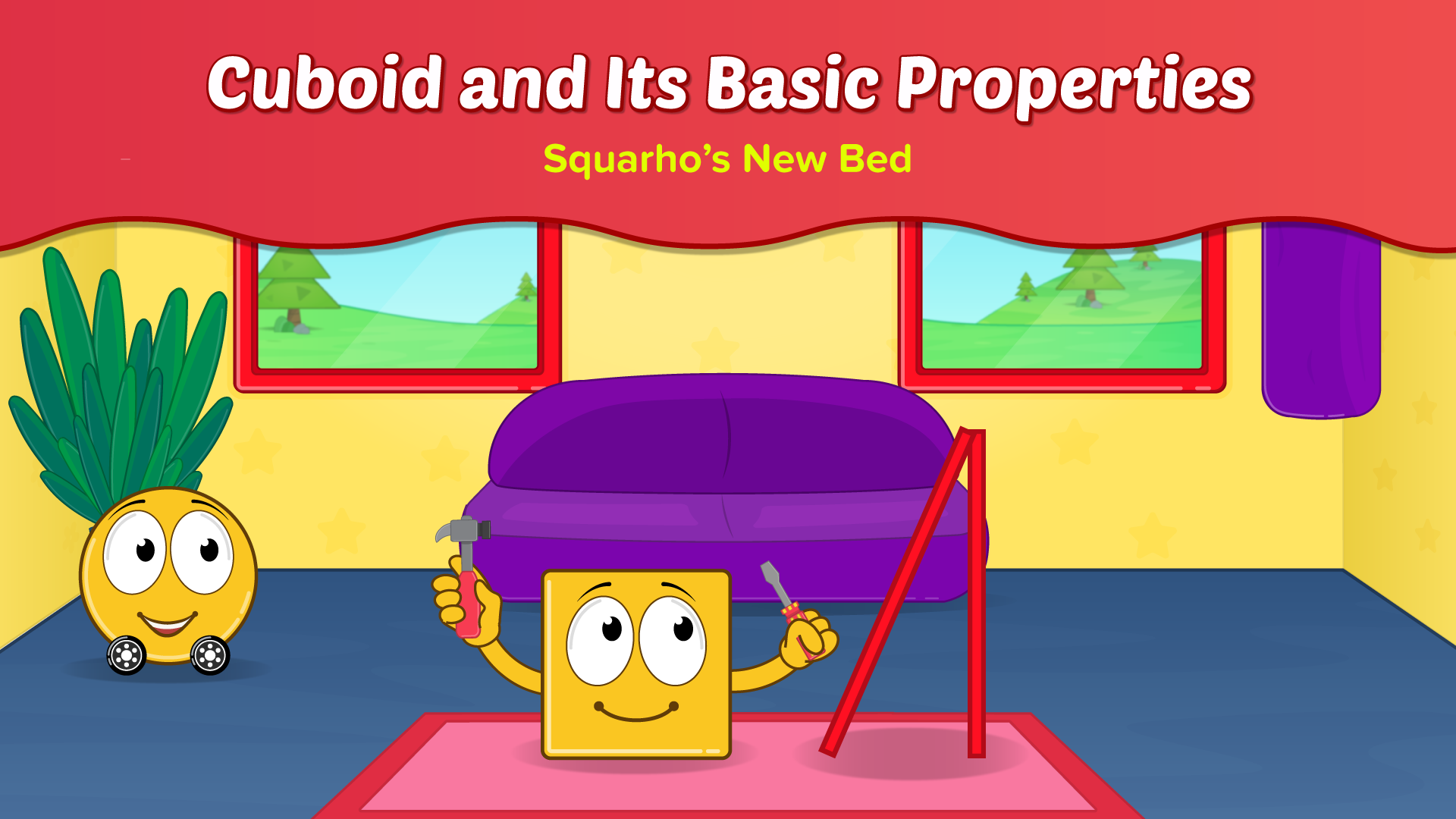
One of our favourites is about Cirho, who wants to build his bed. He tries using a cube-shaped bed, but then later realises that cuboids are special because they have flat faces and straight edges that fit together just right.
This story helps kids connect emotionally with shapes, making learning feel like part of their everyday world.

Once the story sparks interest, we guide kids to think about what makes a cuboid a cuboid. How many faces does it have? Are all the sides the same? Can it roll or slide?
Our worksheets invite kids to colour cuboid faces, count edges, and compare shapes. We ask questions like :
- What happens when you try to roll a cuboid?
- Which cuboid is bigger—your lunchbox or your storybook?
- Can you find two cuboids that are not the same size?
One mom, Jessica, went to the supermarket with her daughter, Ava. She started pointing out cuboids during a visit to the supermarket. ‘Mom, the butter pack is a cuboid. So is the soap box!’ That kind of noticing shows the concept has truly landed.
While her son, Lucas, started sorting his toy cars by shape. ‘He put all the cuboid ones in a row and said they were the “stackable team”. Jessica was really happy to see her kids excited about geometry.

This is where the fun begins. Kids learn best when they use their hands. In our Maker Activities, we invite them to build cuboids using cardboard, Play-Doh, or building blocks. They measure, cut, fold and create. They feel the edges, test the corners, and see how cuboids behave.
Here are a few playful ideas to try at home :
- Stack cuboid-shaped boxes to build a tower
- Wrap a cuboid gift and talk about its faces and edges
- Use building blocks to make a cuboid train or wall
- Cut out rectangles and tape them together to build your own cuboid
- Use snack boxes to build a mini city—juice boxes for buildings, granola bar packs for garages
One family used empty tissue boxes to build a mini fort. Another made cuboid towers with shoe boxes and cereal packs. A mom named Rachel told us her son, Ethan, used LEGO bricks to build a cuboid robot and named it ‘Boxy’. These moments are not just fun—they are powerful learning experiences that stay with kids long after the activity ends.
Here are a few simple facts to share with your kid :
- A cuboid has 6 faces, and each face is a rectangle
- It has 12 edges and 8 corners
- It can slide but not roll
- It is found in many everyday objects like books, boxes, bricks, drawers, and phones
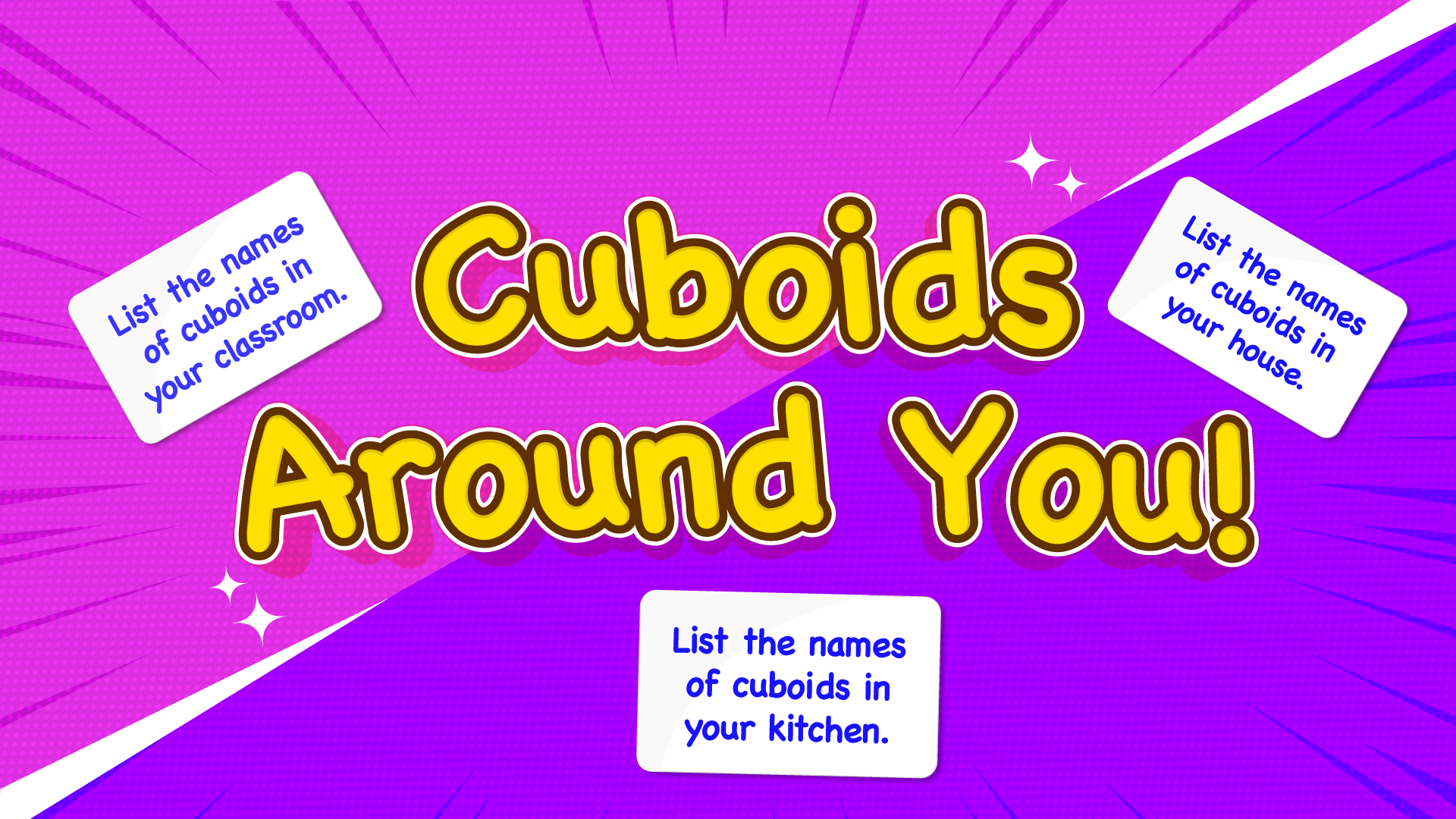
You can turn this into a scavenger hunt. Ask your kid to find five cuboids around the house. Let them hold, stack and talk about what they notice. You may be surprised how quickly they begin to see the world through a mathematical lens.
Understanding shapes like cuboids is more than just geometry. It helps kids develop spatial awareness, problem-solving skills and confidence in exploring the world around them. When they learn through stories, reasoning and hands-on play, they do not just understand math—they begin to enjoy it.
As a parent, you are not just helping with homework. You are shaping how your kid sees learning. Whether you are building a cardboard castle together or chatting about the shape of a lunchbox, your presence makes all the difference.
At Uncle Math Lab, we are here to support that journey. Our eBooks are crafted to make math feel like a story worth telling, a puzzle worth solving, and a skill worth celebrating.
Because when kids learn with their heart, head and hands, they do not just learn math. They grow into curious, confident explorers.