Let me tell you something you might not expect: you already know a lot about cylinders. You have rolled them, stacked them, and maybe even spilled juice from one. This guide is not just about geometry. It is about noticing the shapes that quietly help us live our lives.
Whether you are a parent like Sarah from Florida or a curious 10-year-old like Jake from North Carolina, this is for you.

Let us start in the kitchen. Jake is helping his mom unpack groceries. He pulls out a can of pineapples and says, “This feels like a math shape.” His mom smiles and says, “It is. That is called a cylinder.”
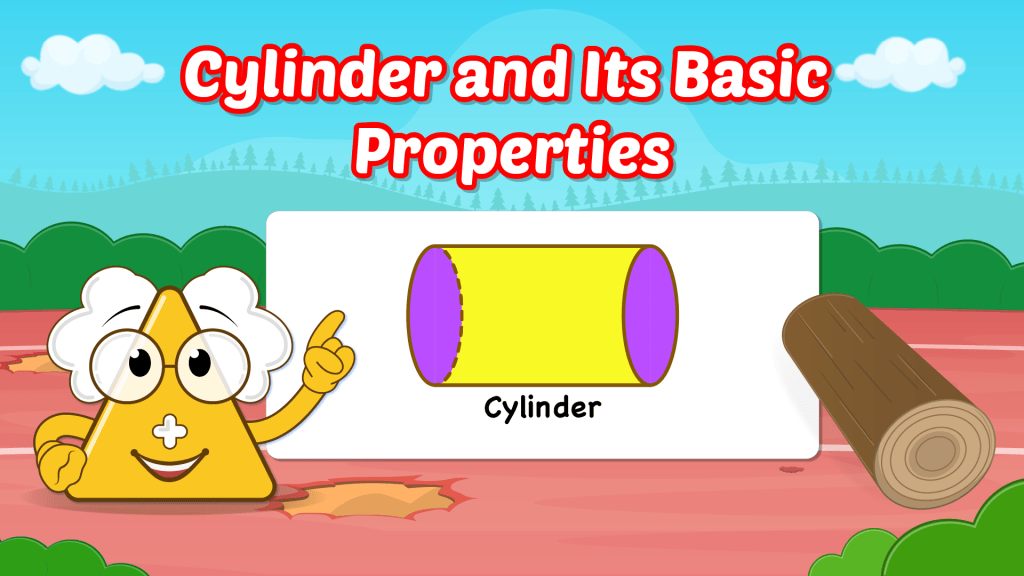
A cylinder is a three-dimensional shape with :
- Two flat, circular ends : one on top, one on the bottom.
- A smooth, curved side that wraps around.
- No corners. No edges that poke out.
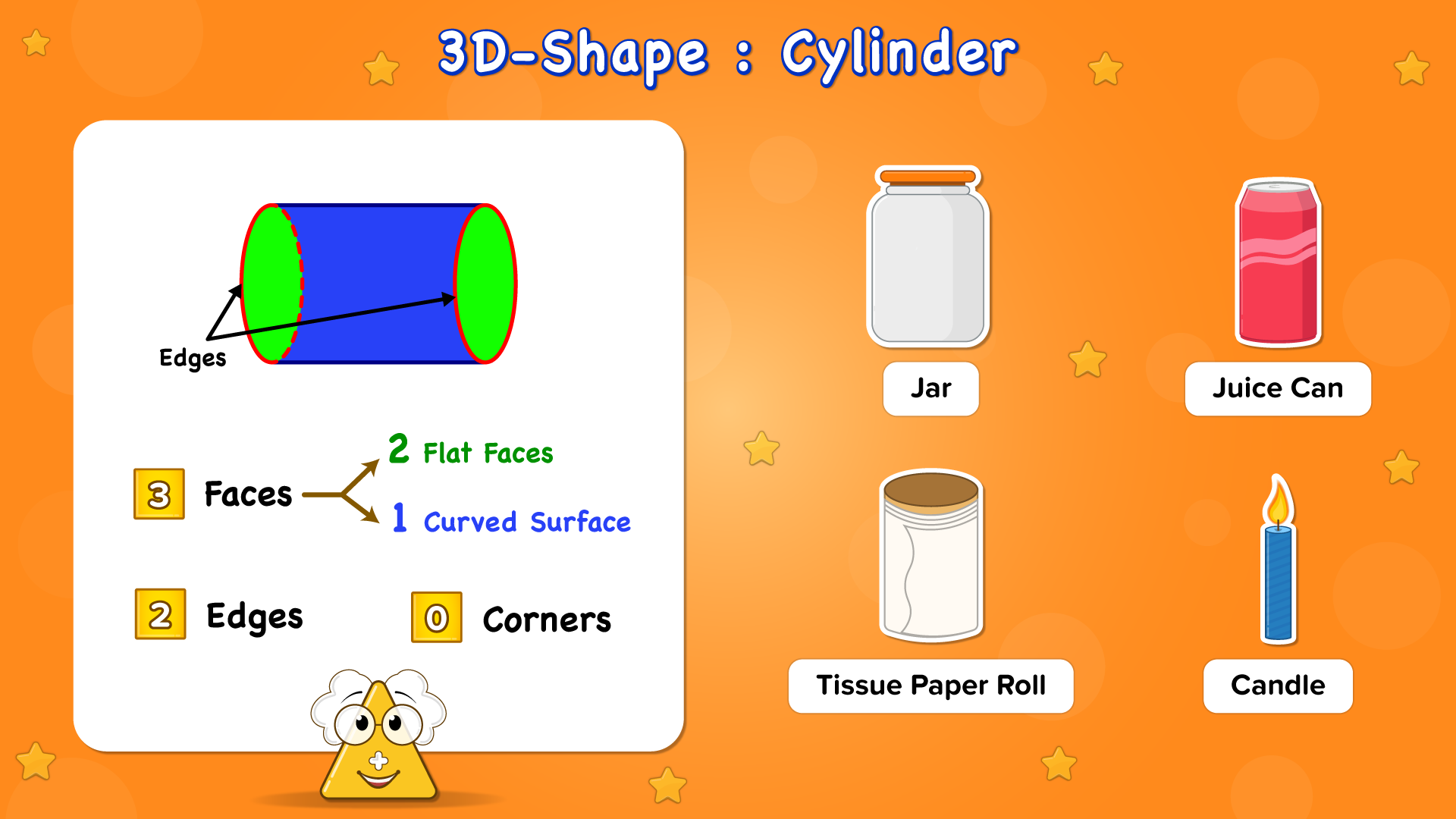
Think of a juice can, a rolling pin, or even the paper towel roll on your counter. These are not just objects; they are cylinders doing their job.
Let us walk through a regular day.
You wake up and grab your water bottle. That is a cylinder.
You eat breakfast and pour juice from a can. Another cylinder.
You help your dad fix the sink. The pipes? Cylinders again.
When Jake asked his mom, “Why do juice cans roll but boxes do not?” she said, “Because cylinders are made to roll. That is their superpower.”
Here is what makes a cylinder special :
- It has three faces : two circles and one curved surface.
- It has two edges where the curved side meets the circles.
- It has no corners.
- The height is how tall it stands.
- The radius is how far it is from the center of the circle to the edge.
Jake once made a cylinder out of construction paper. He flattened it and saw that it was just a rectangle and two circles. “So that is what it looks like inside,” he said. That is called a net, the unfolded version of a 3D shape.
This method helps kids learn with curiosity, clarity, and action.

Tell a story. For example, imagine trying to flatten a sandbox with a cube. It does not work. Then you use a paint roller, a cylinder and it smooths everything out. That is because cylinders roll. That is why they are used in construction, baking, and even printing.
Ask your kid :
- What things around the house are shaped like cylinders?
- Why do you think soda cans are not shaped like cubes?
These questions spark curiosity.

Teach the parts :
- The two circular bases
- The curved surface
- The height and radius
Explain what each part means. Make it feel like solving a puzzle, not memorizing a rule. Even you can help your kid with few practice sheets.

Let your kid collect 3 cylinders in your home in 2-minutes time. Compare all whether short or wide, tall or thin. Let them guess. That is how learning sticks.

You do not need to be a math expert. You just need to be curious with your kid.
Go on a “cylinder hunt” around the house.
Ask “why” questions during everyday tasks.
Let your kid make mistakes while measuring. Talk about what went wrong and what they learned.
Connect math to cooking, driving, building, and even gift wrapping.
This is not just math. It is a conversation. It is a moment of discovery.
Cylinders are not just shapes in a textbook. They are part of your home, your routines, and your kids’ world. When kids learn with heart (curiosity), head (understanding), and hand (practice), they do not just memorize geometry; they understand it.
Feel free to explore Uncle Math Lab’s eBook on cylinders here.
