If you have ever watched your kid point to a cereal box and call it a rectangle, or draw a circle and say it is a ball, you will know how curious they are about the world around them. These moments are not just sweet. They show that your kid is beginning to notice shapes and how they work. As parents, we are often the first teachers, helping them make sense of what they see.
This is why we created our new ebook for kids aged 8 to 11. It is built on the 3H approach of Heart, Head and Hand. It helps kids learn in a way that feels natural and joyful. It is not just about teaching geometry. It is about helping kids connect with learning through stories, thinking and hands-on play.
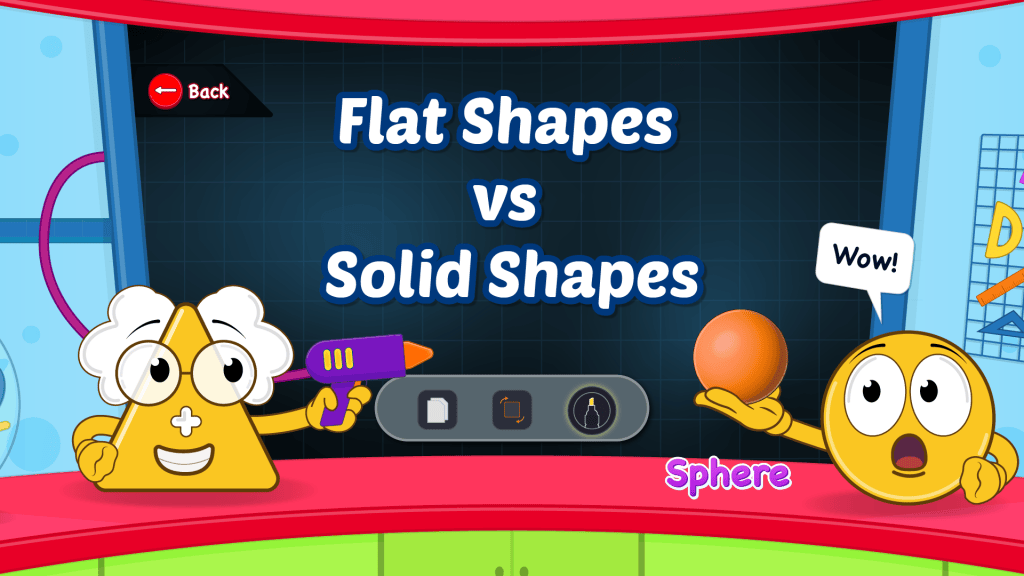
Flat shapes are also called two-dimensional shapes. They are the ones we draw, trace, or cut out. They have length and width, but no depth. Common flat shapes include squares, circles, triangles and rectangles.
I remember one afternoon when my daughter Sophie was making birthday cards. She cut out paper hearts and stars and stuck them on the front. She looked up and said, ‘Mumma, these shapes are flat, but my teddy is not flat, is it?’ That was her way of noticing the difference. It was a small moment, but it led to a lovely chat about how some shapes are drawn, and others are built.
Solid shapes are also called three-dimensional shapes. These are the shapes we can hold, build and play with. They have depth as well as length and width. Examples include cubes, spheres, cones and cylinders.
One rainy Saturday, my son Jack was building a tower with cardboard boxes. He tried to balance a cone on top and it kept sliding off. He frowned and said, ‘This one does not work as a roof.’ I smiled and said, ‘That is because cones have round sides, not flat tops like cubes.’ He nodded and kept building. That moment showed how much kids learn by doing.
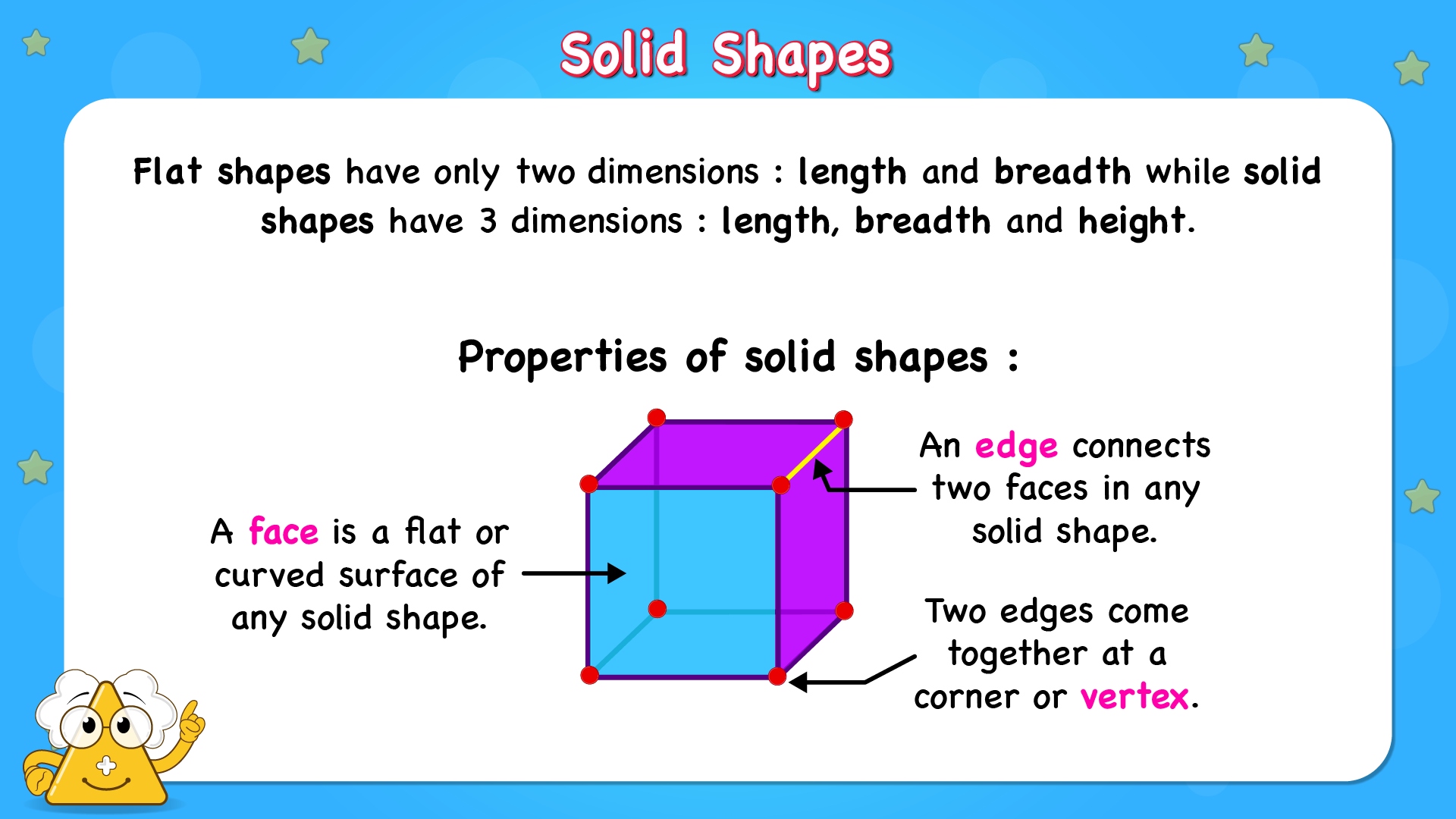
Knowing the difference between flat and solid shapes helps kids understand the world around them. It is not just about naming shapes. It is about seeing how they behave and where they appear in everyday life.
Our ebook brings this learning to life through the 3H approach :
- Heart: We start with stories and feelings. Kids connect shapes to things they love. A circle becomes a Frisbee. A square becomes a Photo frame.
- Head: We help kids think and ask questions. Why does a sphere roll but a cube does not?
- Hand: We encourage hands-on play. Kids cut, fold, build and explore. They learn by touching and moving.

You do not need to be a teacher to help your kid learn about shapes. Your home, your garden and your kitchen are full of shapes waiting to be noticed.
- In the kitchen: Talk about the shape of a biscuit cutter (circle), a slice of bread (rectangle), or a tin (cylinder).
- During play: Use building blocks to explore cubes, cones and spheres. Ask which ones stack best.
- On walks: Spot shapes in buildings, signs and nature. A leaf might be a flat oval. A tree trunk is a solid cylinder.
One evening, while folding laundry, Sophie held up a towel and said, ‘This is a rectangle, right?’ I nodded. Then she rolled it up and said, ‘Now it is a cylinder!’ That is the kind of learning we love. It is simple, curious and full of wonder.

We did not just write a book. We created a guide that helps kids learn with joy and confidence. It is full of stories, activities and gentle challenges that make geometry feel like play.
Whether your kid is just starting out or already asking big questions, this ebook meets them where they are and helps them grow.
So if you are looking for a way to make learning more human, more connected and more fun, this is it.
Let us help our kids see the world not just in shapes, but in possibilities.Explore our ebook today and see how the 3H approach can turn everyday moments into lifelong learning.
