‘The teddy is under the table!’ ‘Look! The ball rolled behind the sofa!’
These are just sweet little moments. They are your kids’ first steps into understanding spatial concepts. And often, they happen when no one is trying to teach anything.
Let’s explore what spatial concepts are, why they matter, and how the 3H approach makes them meaningful and fun for your little learner.
What Are Spatial Concepts?
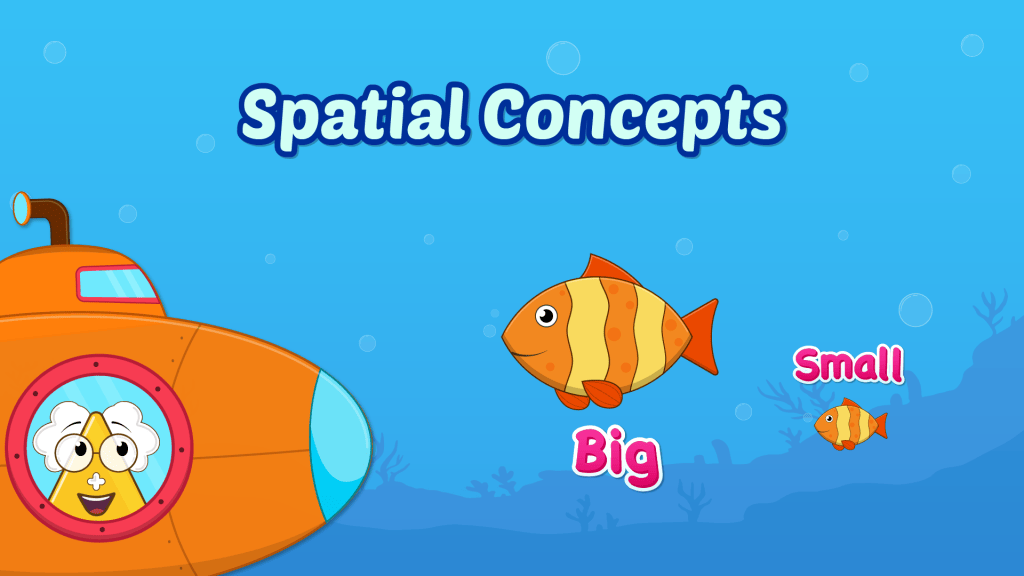
Spatial concepts are the building blocks of how we understand the space around us. For young kids, these pre-math concepts help them make sense of where things are, how they move, and how they relate to each other.
Words like :
- Big–Small
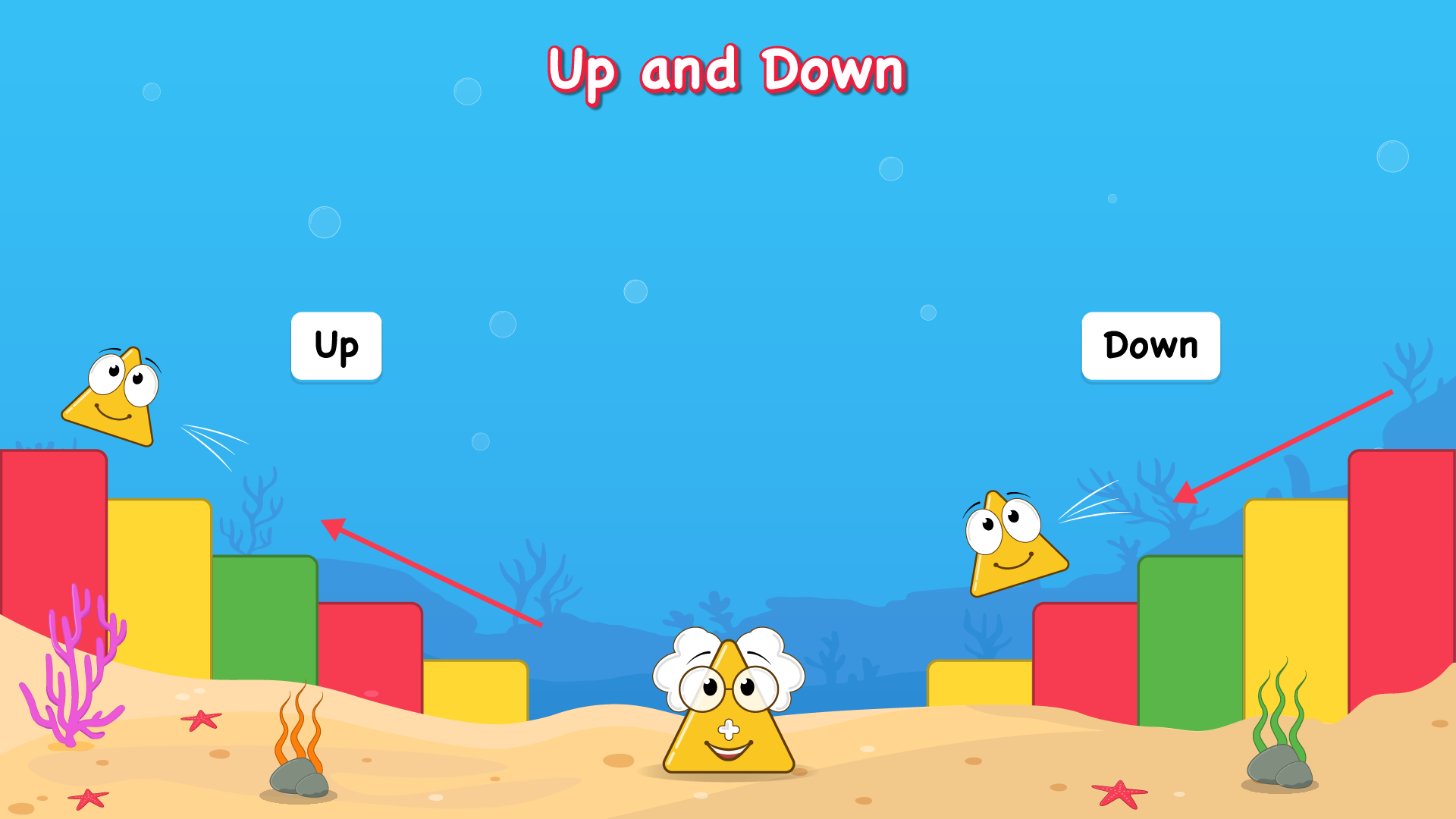
- Up–Down
- Left–Right
- In–Out
- Full–Empty
- More–Less
These are not just vocabulary; they are tools for thinking. They help kids follow directions, understand maps, grasp measurement concepts, and develop an awareness of space and distance.
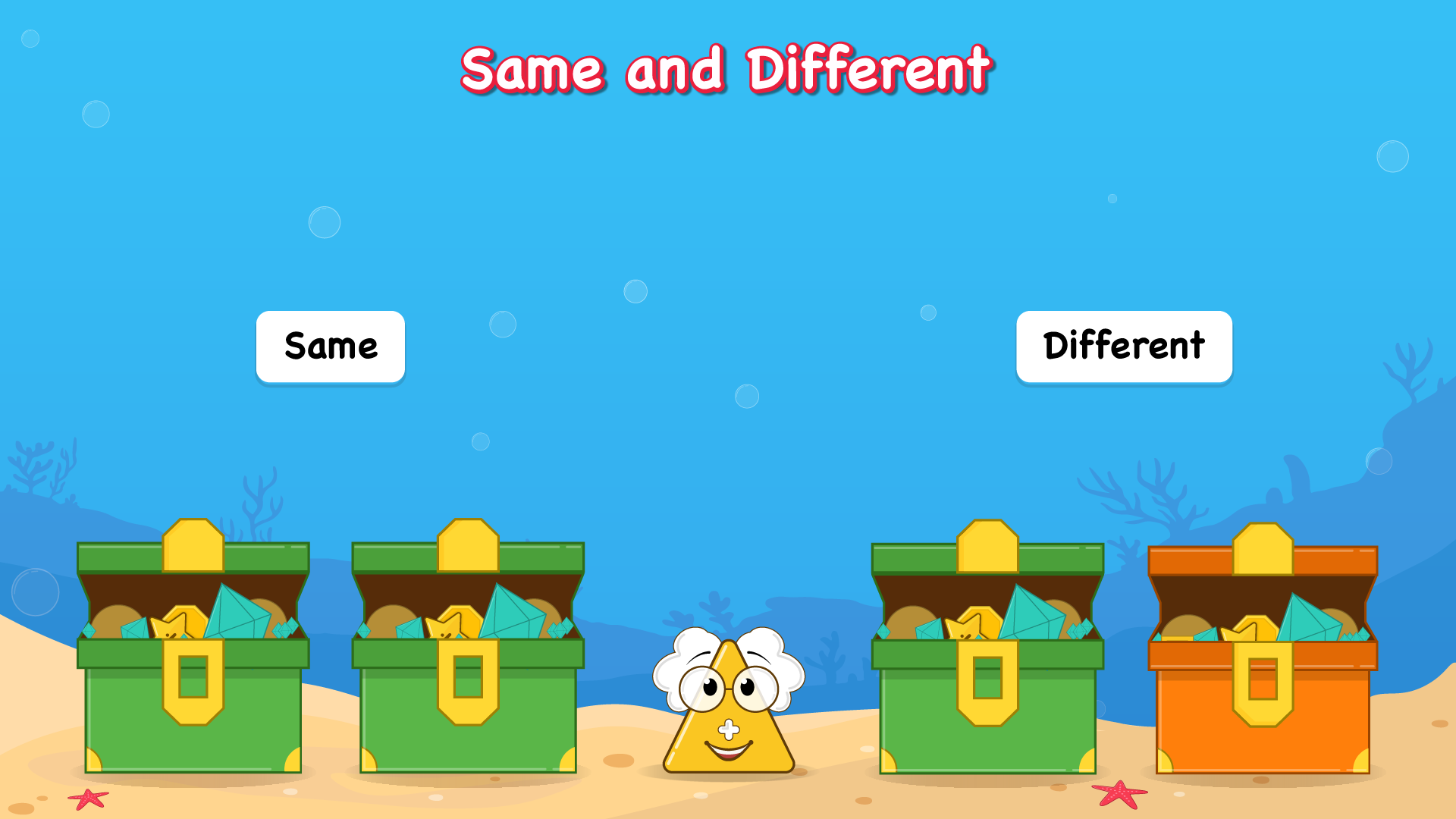


I remember how my daughter Jessica was helping set the table. ‘I placed spoons ‘next to’ the plates and napkins ‘under’ them. I am making it neat,’ she said. That very moment, I realised this wasn’t just setting the table, but it was spatial learning, quietly unfolding in the middle of dinner prep.
 HEART : Learning Through Stories and Emotions
Kids connect best through stories that reflect their world. That’s why we, at Uncle Math Lab, always begin with warmth, with characters they care about and adventures they want to follow.
In stories, kids follow characters who swim under water, fly over rooftops, and peek behind curtains. They are not just reading, they are imagining, feeling and learning without even realising it.
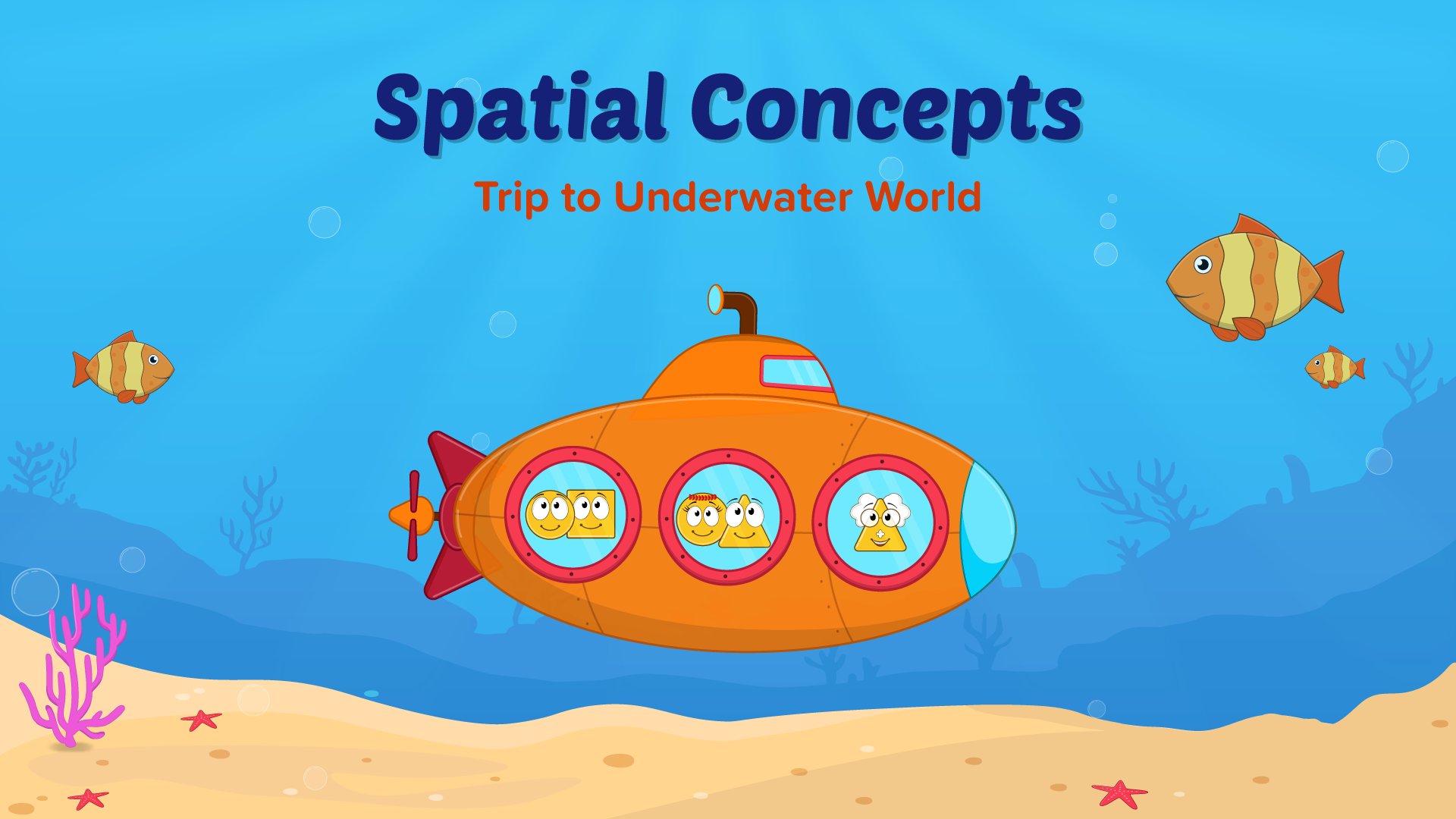

You can try this at home : Turn clean-up time into a story. ‘Can you put the red car inside the basket? Let’s hide the bear under the bed!’ You will be surprised to see how quickly your kid starts using spatial words on their own.
 HAND : Learning by Moving and Doing
Spatial concepts come alive when kids move, build and explore. That’s why our Uncle Math Lab’s Math Comic Book includes interactive activities that get kids moving and using their bodies and hands.
My daughter, Jessica, once created an obstacle course in the living room. ‘Go over the pillow, under the chair and through the tunnel!’ she shouted, guiding her teddy through. That’s when I felt that she was not just playing, but she was also learning spatial vocabulary without a single worksheet.
Try this at home : Create a simple treasure hunt. Give clues like, ‘Look behind the curtain’ or ‘It’s between the books on the shelf.’ Watch your kid light up as they follow each clue and use spatial words with confidence.
 HEAD : Understanding Through Simple Logic
Once kids are emotionally connected, we should introduce the logic behind spatial ideas.
I remember my nephew playing with toy animals. I asked him, ‘Where’s the lion?’ He replied, ‘Next to the giraffe, behind the zebra. He was never taught these spatial words, but he just picked them up from the comic book.
That is the power of gentle modelling. Kids see characters climbing over, crawling under or jumping next to something. They begin to understand not just the words, but the ideas behind them. This helps them describe what they see, follow instructions better and eventually, understand maps, graphs and shapes more clearly.
Try this at home : Ask questions like, ‘Where is your shoe? Is it next to the door or under the table?’ Let your kid describe positions in their own words. You will hear their thinking unfold.
Why This Matters?
Kids who grasp spatial concepts early are better prepared for subjects like math, reading and science. They are more confident in following directions, describing what they see and organising space and ideas.
I remember how my daughter was helping rearrange books. She said, ‘Let’s keep the big ones on the left and the small ones on the right.’ So I think…That’s not just sorting, it’s spatial thinking.
By learning through the 3H Approach, kids don’t just memorise, they truly understand. They learn to observe, describe and interact with the world thoughtfully.
How Our Comic Book Makes a Difference
At Uncle Math Lab, we believe math begins long before worksheets and numbers. It begins when a kid crawls under a chair, stacks blocks, or hides a toy inside a box. That’s why our comic book series is built around the 3H approach : Heart, Head and Hand, helping kids learn through connection, thinking and action. In our math comic books, we use clear visuals and short dialogues to model prepositions and directions.

Our math comic book series is designed to grow with your kid. Through warm stories, clear visuals and engaging activities, it helps them :
- Build emotional confidence with friendly characters and relatable adventures (❤️ Heart)
- Develop conceptual clarity through simple and age-appropriate logic (😃 Head)
- Strengthen understanding through playful and purposeful movement (✋ Hand)
It’s not just about teaching math, it’s about helping kids see, move through and make sense of their world.
Ready to Start the Journey?
If your kid is between 3 and 6 years old, this is the perfect time to introduce spatial concepts in a way that’s both gentle and powerful. With the right blend of story, thought and action, spatial learning becomes part of everyday fun.
Explore our math comic books today and give your kid a strong, joyful start to understanding space, directions and much more.
Because real learning happens when the heart is involved, the head is engaged and the hands are free to explore.