
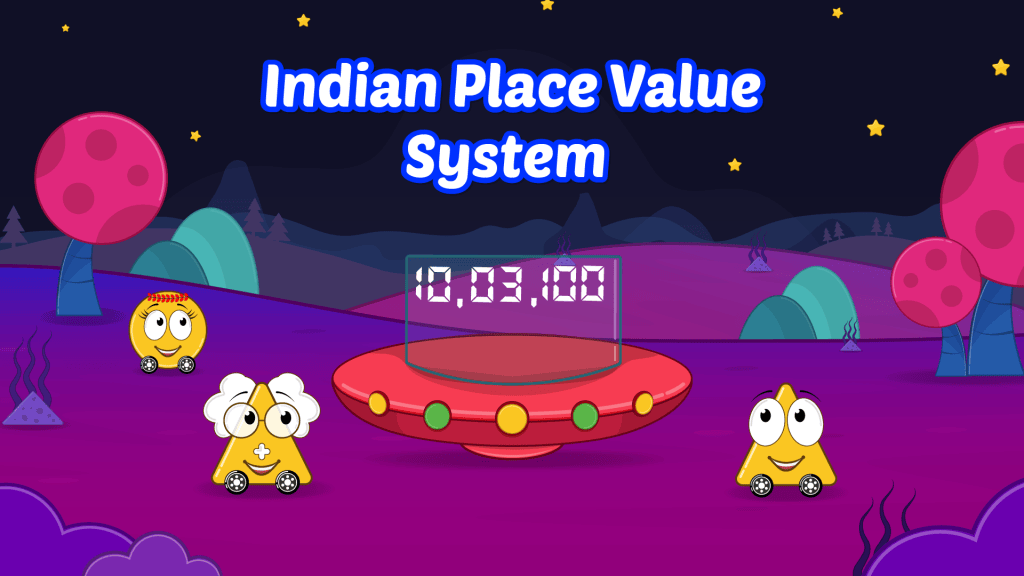
Before we dive into commas and crores, let’s pause for a moment. Large numbers often feel like a wall of digits to kids—confusing, distant, and hard to read. The Indian Place Value System offers a beautiful way to break that wall down. It’s rhythmic, familiar, and rooted in the way we speak and think about numbers in everyday life.
For kids aged 8 to 11, this system is a key milestone. But it’s not just about math—it’s about helping them feel at home with numbers. And for parents, it’s a chance to turn everyday moments into gentle learning experiences. This blog, powered by the 3H approach—Heart, Head, and Hand—is here to help you do just that.
 HEART : The quiet magic of a number on a biscuit packet
This happened on a regular afternoon. I was in the kitchen with my son, sharing a packet of biscuits after school. He turned the packet over and spotted a number—₹1,25,00,000. His eyes widened. ‘Mumma, how do you even say that?’
I paused, wiped my hands on a tea towel, and said, ‘Let’s figure it out together.’ We sat down at the table, the biscuit packet between us, and started breaking the number apart. First the lakhs, then the crores. No textbook. No pressure. Just a quiet moment of discovery.
That’s the kind of learning that stays.
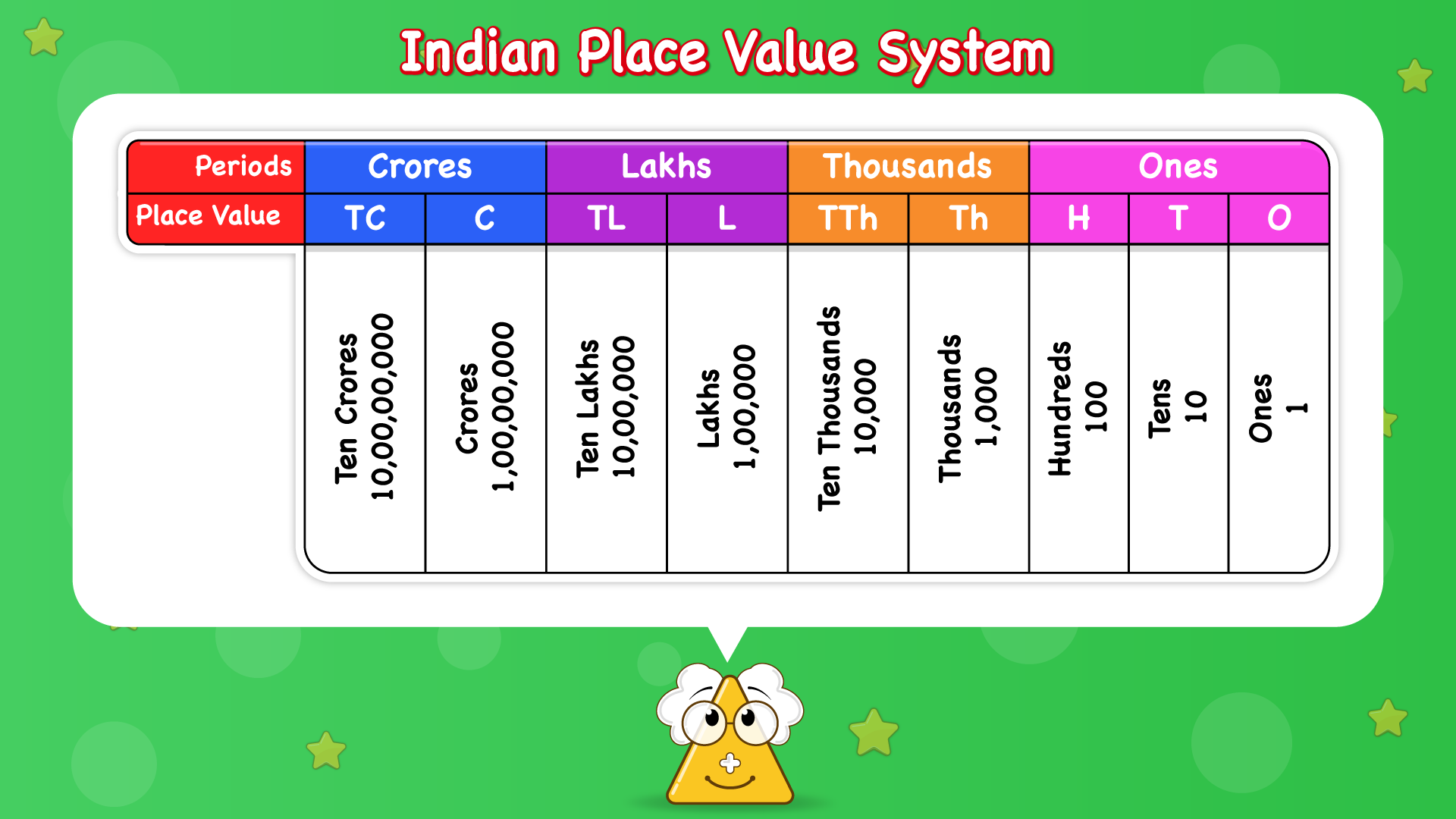
Large numbers can feel enormous to kids—like trying to count stars or imagine how many grains of rice are in a sack. But when we slow down and bring those numbers into everyday life, they become less intimidating. The Indian Place Value System is beautifully rhythmic. It doesn’t rush. It groups digits in a way that feels familiar—three digits first, then commas every two digits. Ones, tens, hundreds… then thousands, lakhs, crores.
It’s not just about math. It’s about helping kids feel at home with numbers. And as parents, we’re right there beside them—not with all the answers, but with the patience to explore.

 HEAD : Let’s make sense of the commas, gently
You don’t need fancy worksheets or printed charts. Sometimes, a scrap of paper and a pencil are enough.
Start with a small number—say, 1,000. Show your kid how the comma comes after the first three digits. Then move to 10,000. Now 1,00,000. Let them hear the pause when you say ‘One lakh’.
Build slowly. Let them see the pattern. After the first comma, every two digits form a new group. So 1,00,00,000 becomes ‘One crore’.
Here are a few gentle ways to practise together:
- Comma spotting: Write a few large numbers without commas and ask your kid to place them. Use coloured pencils or stickers to make it playful.
- Say it out loud: Pick a number, like 23, 45, 678, and read it together. Let them hear the rhythm.
- Real-world hunt: Look for large numbers in newspapers, shop signs, or even biscuit packets. Read them together and talk about what they mean.
- Make it personal: Ask your kid to imagine how many books they’d want in their dream library. Write the number down and break it into lakhs and crores.
These aren’t drills. They are invitations. Little nudges that help kids feel confident and curious.


 HAND : Build a number that belongs to them
Let’s turn numbers into something tangible that people can build.
The Number Ladder
You’ll need a few sticky notes or bits of card, a marker, and a bit of space on the floor or wall.
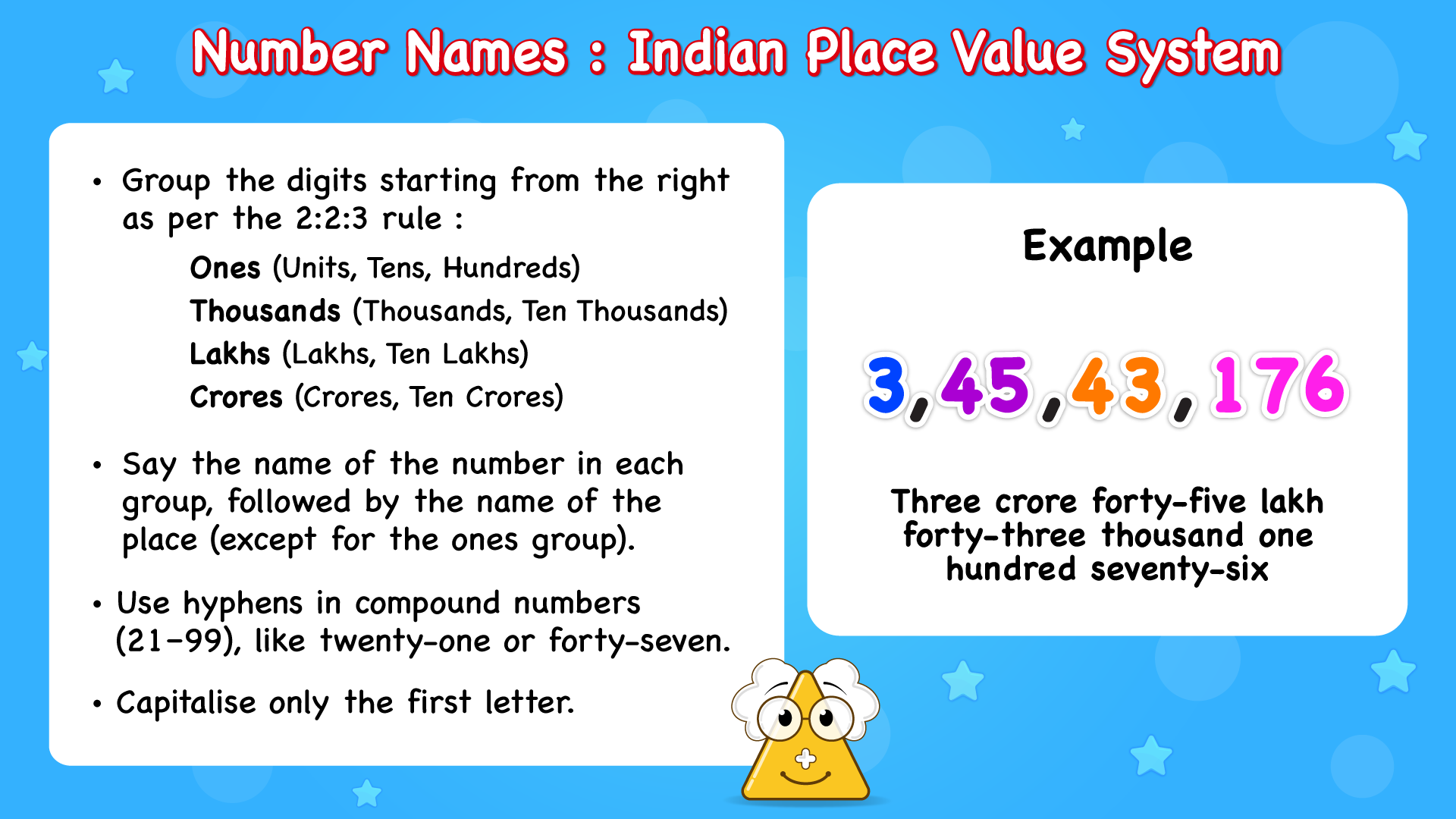
Write digits 0–9 on separate cards. Then, together with your kid, build a large number—say, 68,94,32,107. Help them place the commas: after the first three digits, then every two. Label each group—ones, thousands, lakhs, crores.
Now read the number aloud together. Let them point to each part. Let them feel the rhythm.
One afternoon, my son created a number for the ‘total number of mangoes he’d eat in his lifetime’. It was over 90 crore. We built it together, giggling as we added commas and imagined mango trees stretching across the sky.
To make it even more fun, let your kid invent their own number. How many stars in their dream sky? How many puppies in their imaginary farm? Build it together. Let it be theirs.
This isn’t just a math activity. It’s a memory in the making.

Learning that feels like home
When we teach large numbers through the lens of Heart, Head, and Hand, we’re not just building math skills—we’re building trust. We’re showing kids that learning doesn’t have to be loud or complicated. It can be quiet. Familiar. Full of warmth.
The Indian Place Value System becomes more than a topic—it becomes a shared language between parents and kids. A way to make sense of the world, one comma at a time.
This blog is part of our ongoing series to support families through our 3H-powered eBook, designed to make math joyful, story-rich, and hands-on. Because every number has a story—and every kid deserves to feel part of it.
