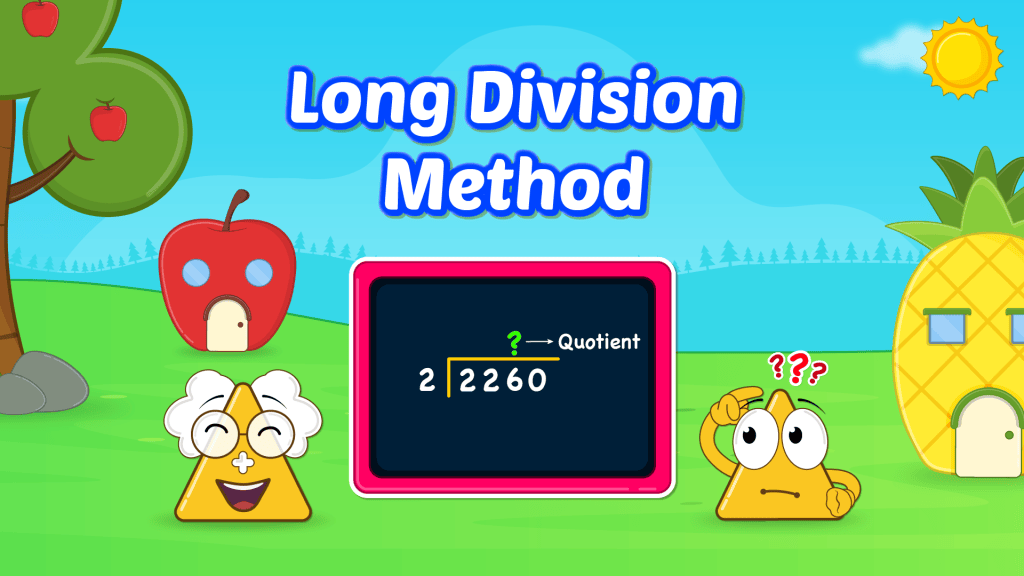
Long division. Just the words can make some of us pause. Maybe you remember sitting at your school desk, pencil in hand, trying to keep your columns neat while your mind raced ahead. Now, years later, you are sitting beside your own kid, watching them try to make sense of it all.
But here’s the truth : long division doesn’t have to be hard. It can be calm, clear, and even a little fun, especially when we teach it with Heart ❤️, Hand ✋ and Head 🧠
This blog is part of our 3H-powered eBook series, designed to help parents like you bring math home in a way that feels warm, real, and reassuring.

 HEART : A Story from the Kitchen Table
One Saturday morning, Emma was making toast while her 10-year-old son, Oliver, sat at the kitchen table with a packet of 38 grapes. He asked, ‘Mumma, if I give 6 grapes to each of my friends, how many friends can I share with? Will there be any left for me?’
Emma smiled. She didn’t reach for a worksheet. Instead, she sat down with him and started grouping the grapes. Six in each pile. They counted together, six, twelve, eighteen… until they had six full groups. Two grapes were left on the side.
‘So you can give grapes to six friends,’ Emma said, ‘and you’ll have two left for yourself.’
Oliver looked up, surprised. ‘That’s division, isn’t it?’
It was. Long division, tucked inside a simple moment. No fuss. No pressure. Just a mumma and her boy, making sense of numbers through grapes and kindness.
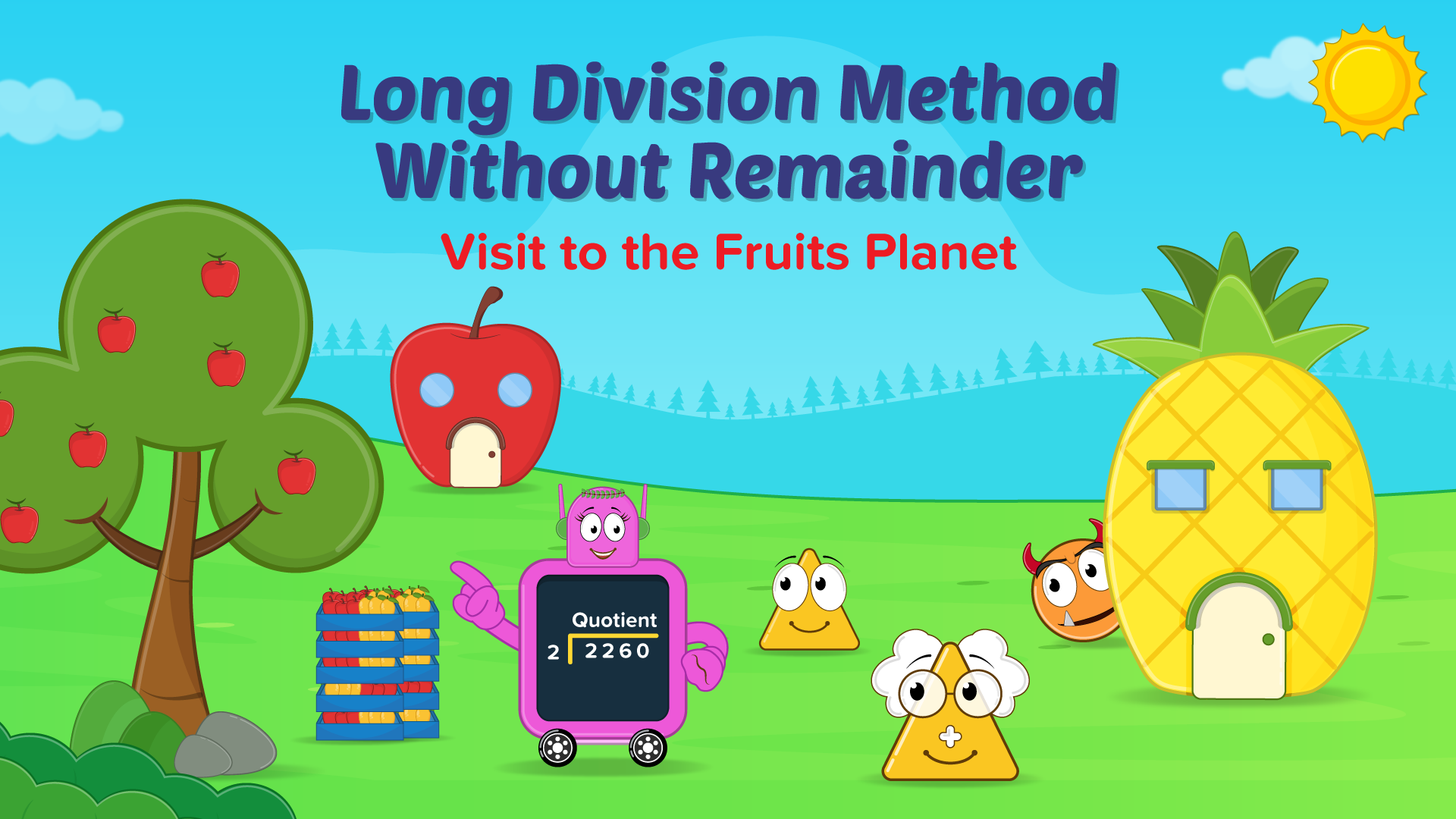
At Uncle Math Lab, our experts have created 2 stories to help you explain this topic of long division method in an even more entertaining way. So, come on and explore our stories.
 HAND : A Simple Game You Can Play Together
Here’s a hands-on activity that turns division into play.
You will need :
- A bowl of small items (buttons, coins, grapes, anything you have)
- A few cards with division problems (e.g. 45 ÷ 4, 62 ÷ 5, 89 ÷ 6)
How to play :
- Pick a card and read the problem aloud.
- Count out the total number of items.
- Group them into equal sets based on the divisor.
- Count how many full groups you’ve made.
- Spot the leftovers, that’s your remainder.
For example, with 45 ÷ 4 :
- Count out 45 buttons
- Make groups of 4
- You’ll get 11 full groups and 1 button left
- So, 45 ÷ 4 = 11, where 11 is the quotient and 4 is the remainder.
This game helps kids see division with their own eyes. It’s not just numbers on a page—it’s something they can touch, move, and understand.

 HEAD : Breaking Down the Steps Simply
Let’s take a gentle example : 73 ÷ 6
Here’s how you can walk through it with your kid :
Step 1: Divide
- Ask : How many times does 6 go into 73?
- Answer : 6 goes into 73 twelve times (because 6 × 12 = 72)
Step 2 : Multiply
- Multiply 6 × 12 = 72
Step 3 : Subtract
- Subtract 73 − 72 = 1
Step 4: Remainder
- So, 73 ÷ 6 = 12 remainder 1
You can try a few more together :
- Divide 58 by 7
- Divide 92 by 13
Let your kid write out each step slowly. If they get stuck, pause with them. Ask, ‘What do you think we should try next?’ or ‘Shall we check that part again together?’ It’s not about rushing to the right answer—it’s about helping them feel calm and capable.


A Final Thought for You, Mumma
Long division isn’t just a math topic; it’s a chance to sit beside your kid, slow down, and show them that learning can feel like home. Whether it’s grapes at the table, a quiet worksheet, or a playful game on the floor, every moment is a chance to connect.
Our eBook is full of stories like these, gentle, real, and rooted in everyday life. Because when math is taught with heart, head and hand, it becomes more than just numbers. It becomes a shared language of love, logic and laughter.
Let’s make learning feel like home. One problem at a time.