

Last weekend, I was sitting with my friend Laura and her son, Josh, at their dining table. Josh had his math workbook open and was staring at a question. He looked up and asked, “Mom, how do I know if 132 can be divided by 3?” Laura smiled, but I could see she was unsure how to explain it in a way that would make sense to him. She said, “I remember learning this, but I do not know how to teach it.”
That moment felt familiar. Many of us want to help our kids with math, but the way we learned it does not always translate. At Uncle Math Lab, we believe math should feel like an adventure. It should be something kids look forward to, not something they dread. That is why we created a series of eBooks for kids aged 8 to 11, built around our 3H approach : Heart, Head and Hand. This method helps kids connect emotionally, think clearly, and learn through doing.
Divisibility rules are a great place to begin.
Divisibility rules are simple patterns that help kids figure out if one number can be divided by another without leaving anything behind. They are like little math secrets. Once kids learn them, they feel more confident and capable.
In one of our stories, all of the kids get fascinated by the computing skills of their friend, Triho. He later explains to his friends about the magic of math and the excitement to learn math shines even better in their minds. It is a small moment, but for a kid, it feels like a big win. These wins matter.

Kids do not just remember facts. They remember how something made them feel. That is why our eBooks use comic-style stories with friendly characters to introduce math concepts. Whether it is a robot that only walks in even-numbered steps or a pirate who only accepts treasure divisible by 10, these stories help kids connect with math in a way that feels familiar and fun.
One mother told us her daughter, Emma, started calling odd numbers “loners” after reading one of our stories. That simple emotional link helped her understand even and odd numbers in a way that stuck.


Once the story sparks interest, we help kids explore the logic behind the rule. Our worksheets do not just ask for answers. They guide kids to think and reason. For example, instead of asking “Is 84 divisible by 3?” we show them how to add 8 and 4 and check if 12 can be divided by 3. It is about building thinkers, not just test-takers.
A father shared how his son, Noah, started checking license plates for divisibility while riding in the car. That kind of curiosity is what we love to see. Learning becomes part of everyday life.
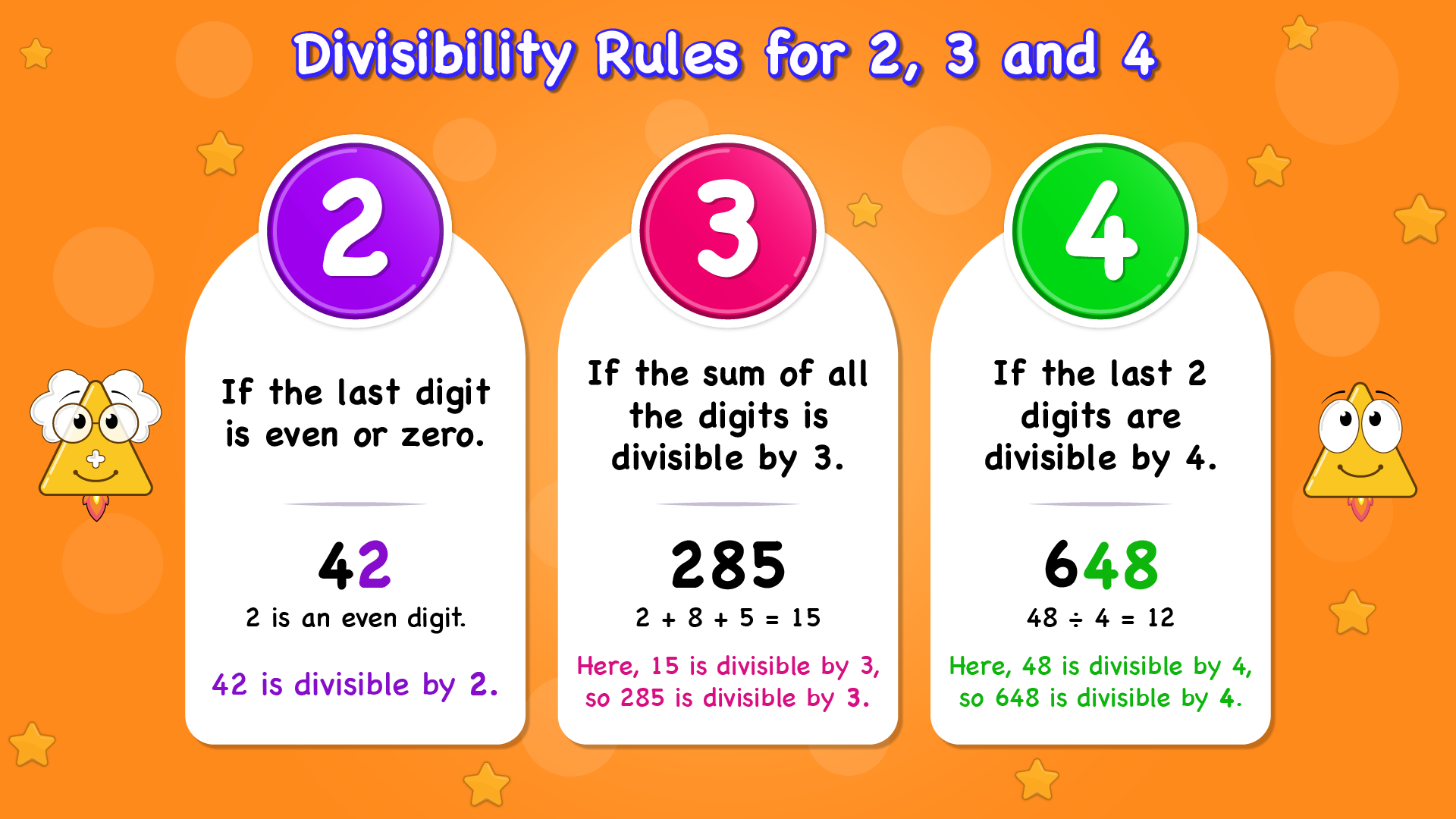


This is where the fun really begins. Kids build number bridges, sort cards, and play detective games to test divisibility. One parent told us her son used cereal pieces to group numbers and check if they could be divided evenly. She said, “He figured out the rule for 4 all by himself.” That is the kind of hands-on learning that stays with them.

Here are a few easy rules to explore with your kid:
- Divisible by 2: If the number ends in 0, 2, 4, 6 or 8
- Divisible by 3: If the sum of the digits can be divided by 3
- Divisible by 5: If the number ends in 0 or 5
- Divisible by 10: If the number ends in 0
You can turn this into a game. Ask your kid to be the “Divisibility Detective” and give them a list of numbers to sort. You may be surprised how quickly they pick it up when they are having fun.
Divisibility rules are more than just math tricks. They help kids feel confident, curious and ready to take on bigger challenges. When they learn through stories, reasoning and hands-on play, they do not just understand math. They begin to enjoy it.
As a parent, you are not just helping with homework. You are shaping how your kid sees learning. Whether you are reading a comic together, solving a puzzle, or simply cheering them on, your support makes all the difference.
At Uncle Math Lab, we are here to walk that journey with you. Our eBooks are designed to make math feel like a story worth telling, a challenge worth solving, and a skill worth mastering. When kids learn with their heart, head and hands, they do not just learn math. They grow into tomorrow’s innovators.
