

When children first encounter the idea of volume, it can feel abstract, almost like numbers floating around without meaning. Yet volume is all about space, and space is something children experience every day. With our 3H approach—Heart, Hand, and Head—we make the concept of volume not only clear but exciting.

 HEART : A Story That Connects
Picture this: A father, Arjun, is helping his daughter pack her toy blocks into a box. She asks, “Daddy, how many blocks will fit inside?” Arjun smiles and replies, “That depends on the volume of the box.”
Suddenly, maths is not just a subject; it is about toys, boxes, and playtime. By linking the idea of volume to everyday experiences—packing lunchboxes, filling water bottles, or stacking books—children see that maths is woven into their world. This emotional connection is the Heart of learning.

 HAND : An Activity That Engages
Children learn best when they can touch and see. Here is a simple activity you can try at home:
Build and Measure Game
Materials: Small cubes (like building blocks or sugar cubes), a shoebox, and a ruler.
- Ask your child to fill the shoebox with cubes, layer by layer.
- Count how many cubes fit along the length, width, and height.
- For example: 4 cubes long, 3 cubes wide, 2 cubes high.
- Multiply: 4 × 3 × 2 = 24.
- Explain: “The box can hold 24 cubes. That is its volume.”
This tactile activity helps children see that volume is about how much space something takes up. It is not just numbers; it is real, physical space. That is the Hand of learning.
 HEAD : Worksheets That Deepen Understanding
Once children have felt and seen the concept, it is time to stretch their thinking. Our Volume Worksheets are designed to reinforce learning through structured practice:
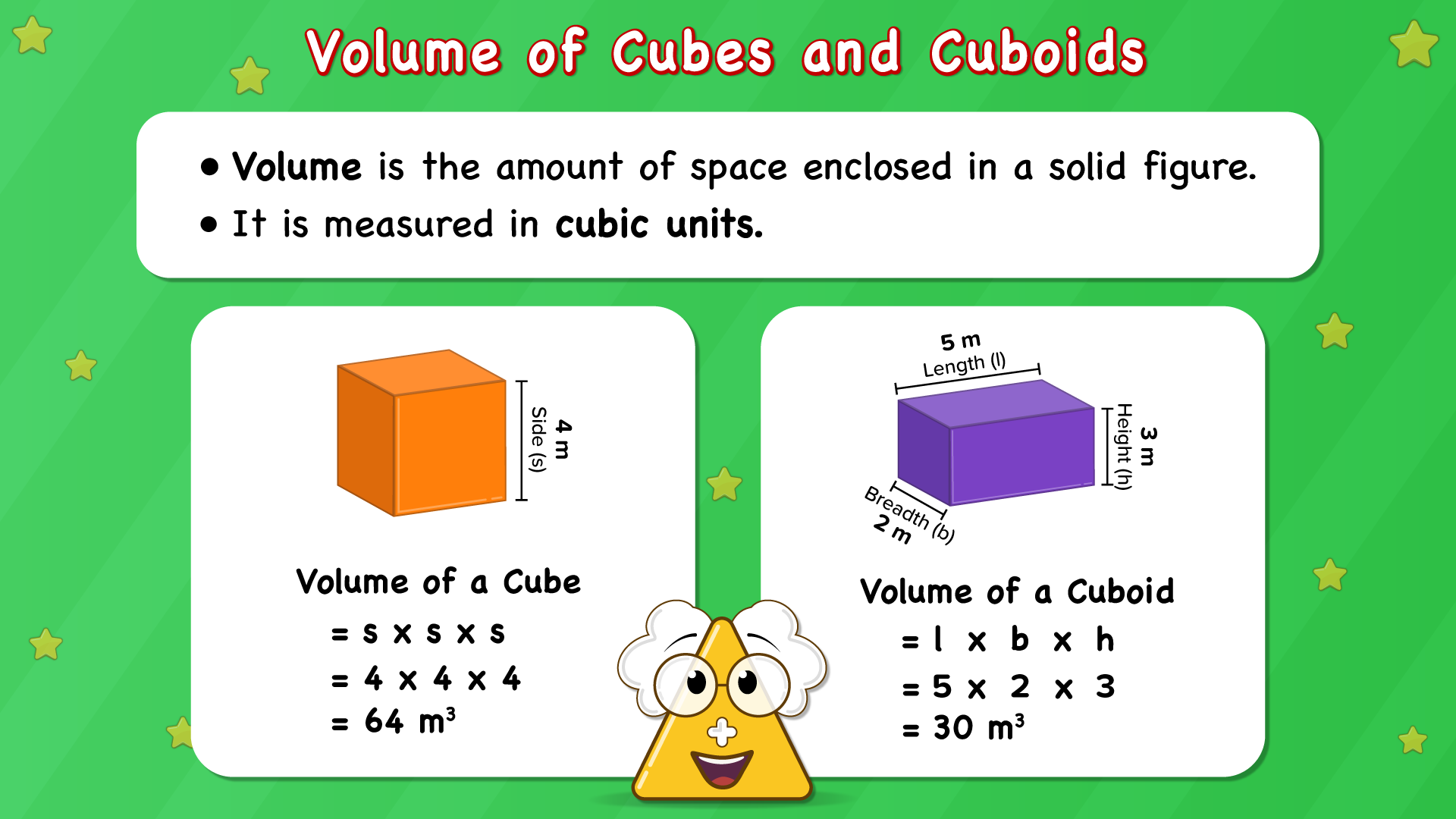
- Step-by-step guides: Calculate volume using Volume = Length × Width × Height.
- Visual puzzles: Colour cubes inside a cuboid to show how volume builds up.
- Word problems: “How many juice boxes fit in a crate?” or “How much water fills a tank?”
- Challenge zones: Explore cubes versus cuboids, and compare volumes with different dimensions.
These worksheets encourage children to reason, calculate, and apply their knowledge in everyday contexts. That is the Head of learning.
Why Parents Love the 3H Approach
Parents often tell us that maths feels less intimidating when it is connected to real life. One mother shared, “My son used to memorise formulas without understanding. After we tried the cube activity, he explained volume to me using his toy box.”
The 3H approach—Heart, Hand, Head—turns abstract maths into meaningful experiences. It builds confidence, curiosity, and a genuine love for learning.
Try It Today
Bring volume to life in your home. Download our Volume of Cube and Cuboid Kit, complete with story prompts, activity guides, and worksheets. Whether you are a parent, tutor, or teacher, this approach will help children learn with heart, hands, and head.
Let us make maths tangible, one cube at a time.
