

When kids begin working with mixed operations—adding, subtracting, multiplying and dividing all in one sum—it can feel like stepping into a maze. Which step comes first? Why does the answer change if you do it in a different order? That’s where the BODMAS rule comes in. It’s not just a math rule—it’s a way to help kids make sense of the path they are walking.
This blog, part of our 3H-powered eBook series, is written for parents who want to make learning feel familiar and calm. With heart, head and hand, we’ll explore how BODMAS works—and how you can guide your kid through it using stories, simple steps and hands-on play.
 HEART : A Story from the Homework Cornerd
Powered by storytelling from our 3H eBook series
One evening, A was helping her 10-year-old son, Arjun, with his homework. He was staring at a problem: 6 + 2 × 3
He’d written down 24. Aanya paused. ‘How did you get that?’
‘I added 6 and 2 to get 8, then multiplied by 3,’ Arjun said.
Aanya smiled gently. ‘Let’s try it another way. What if we do the multiplication first?’
They worked it out together: 2 × 3 = 6 Then 6 + 6 = 12
Arjun blinked. ‘So the order matters?’
‘It does,’ said Aanya. ‘That’s what BODMAS helps us remember. It’s like following a recipe—you can’t bake the cake before mixing the ingredients.’
That moment didn’t need a lecture. Just a quiet corner, a curious question, and a mumma who knew that math is best learned through gentle conversation.
Our eBook begins every topic with stories like these—real, relatable and rooted in everyday life. Because when learning starts with connection, understanding follows naturally.
 HEAD : A ‘BODMAS Builder’ Game
Powered by clear, parent-friendly worksheets from our 3H eBook series
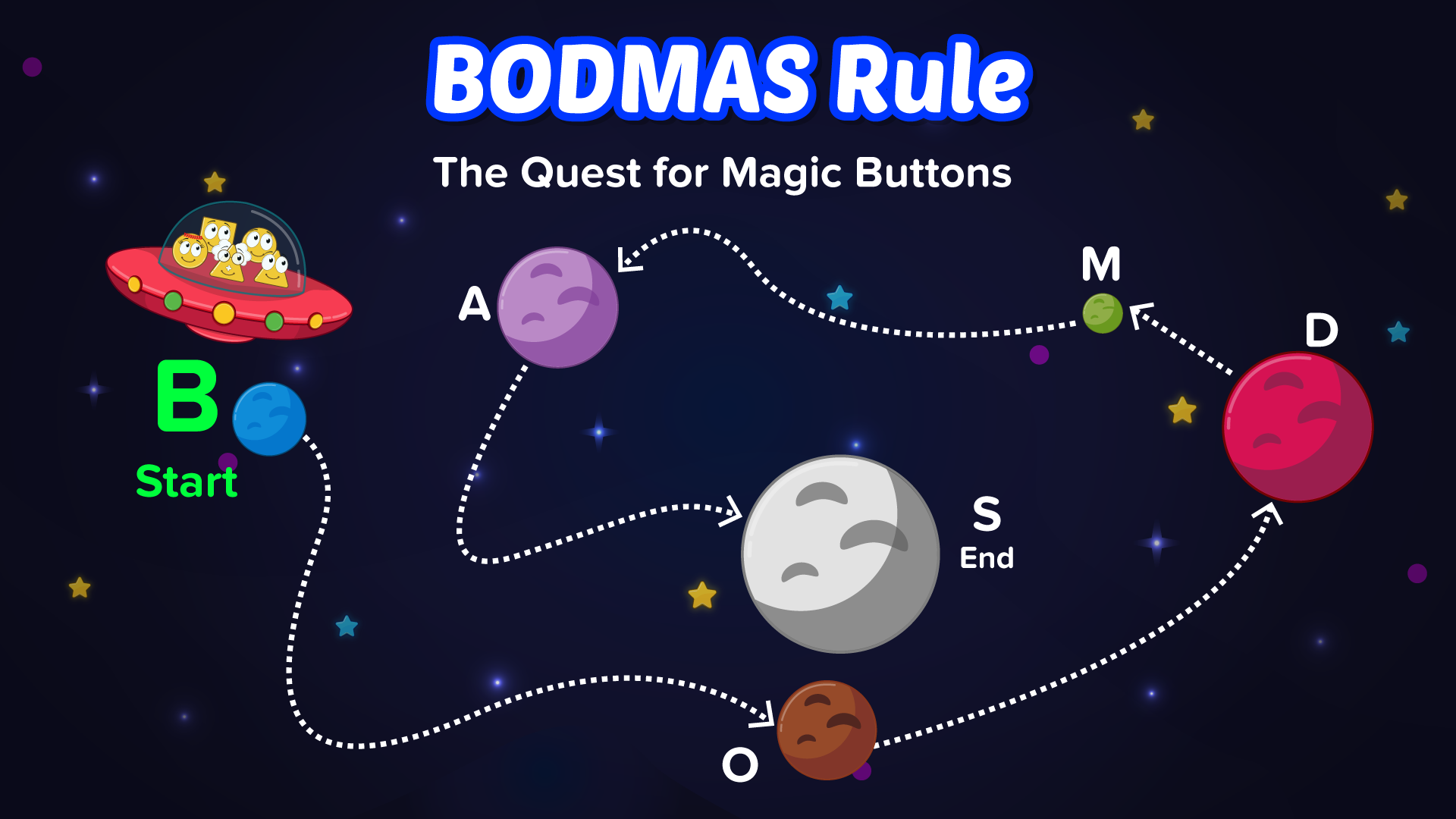
BODMAS stands for:
- Brackets
- Orders (like squares or powers)
- Division
- Multiplication
- Addition
- Subtraction
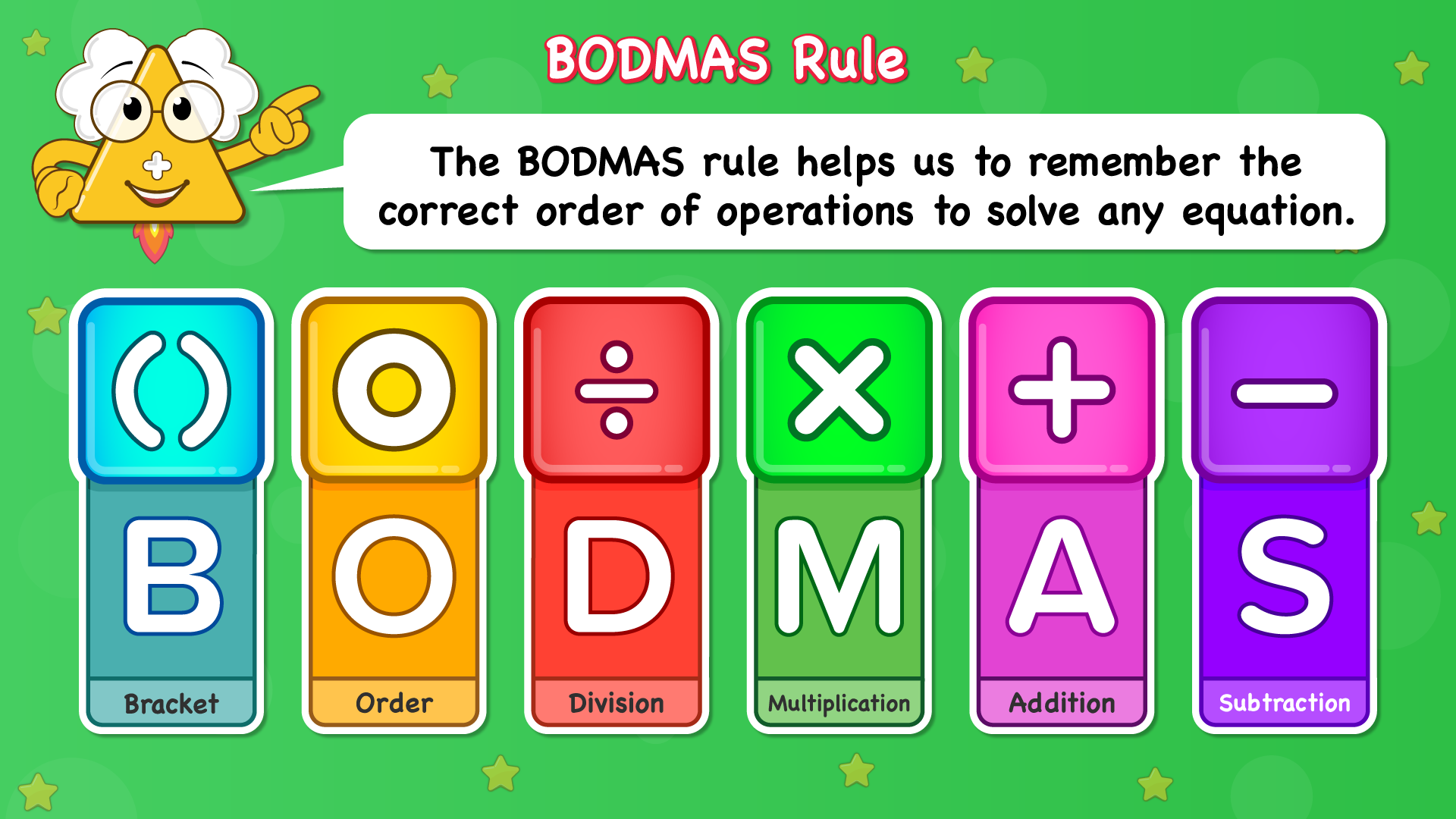
It tells us the order to solve mixed operations. Brackets come first, then orders, followed by division and multiplication (from left to right), and finally addition and subtraction (also from left to right).
Here’s a gentle way to explain it to your kid:
Start with a simple sum: 8 + 4 × 2
Ask: ‘Should we add first or multiply first?’
Guide them to see that multiplication comes before addition: 4 × 2 = 8. Then 8 + 8 = 16
Now try: (8 + 4) × 2
This time, the brackets come first: 8 + 4 = 12 Then 12 × 2 = 24
Let your kid notice how the brackets change the answer. It’s not about memorising—it’s about seeing how the steps shape the result.
Our eBook includes worksheets that walk families through these kinds of examples—step by step, with space to think, draw and talk things through. They are designed for quiet evenings, kitchen tables and curious minds.
 HAND : A ‘BODMAS Builder’ Game
Powered by hands-on activities from our 3H eBook series
Here’s a simple activity that turns BODMAS into a playful challenge.
You’ll need:
- Number cards (1 to 10)
- Operation cards (+, −, ×, ÷) A few bracket cards (just cut out curved shapes)
How to play:
- Lay out a number sentence: e.g. 5 + 2 × 3
- Ask your kid to solve it using BODMAS
- Now add brackets: (5 + 2) × 3
- Let them solve it again and compare the answers
You can turn it into a story: ‘You’re a chef with 5 apples. You add 2 more, then triple the total. How many apples do you have?’ Let them act it out with real fruit or counters. Let them move the pieces. Let them feel the math.

Our eBook is full of activities like this—easy to set up, fun to play, and designed to help kids learn by doing. Whether it’s building with blocks, solving puzzles, or acting out stories, every task is rooted in real life and emotional connection.
BODMAS isn’t just a math rule—it’s a way to help kids make sense of mixed operations. When they learn to follow the right order, they begin to trust the process. And when that learning is shaped with heart, head and hand, it becomes more than just education—it becomes a shared experience.
Our 3H-powered eBook brings this idea to life—with stories that feel familiar, worksheets that make sense, and activities that invite kids to explore. It’s not just a resource—it’s a companion for parents who want to make learning feel like home.
Let’s help our kids find their way through the math maze. One bracket, one question, one smile at a time.
