

A warm guide for parents and kids, powered by the 3H approach of Heart, Hand and Head
Multiplication and division often feel like two separate worlds—one about making more, the other about sharing out. But when kids begin to see how they are connected, math starts to make sense in a deeper, more lasting way. It’s not just about getting the answer right—it’s about understanding how numbers behave, and how one operation can help us check or build the other.
This blog is part of our 3H-powered eBook series, created for parents who want to make learning feel like home. With heart, head and hand, we’ll explore how multiplication and division are two sides of the same story—and how you can help your kid discover that story through everyday moments, gentle guidance and hands-on play.
 HEART : A Story from the Breakfast Table
Powered by storytelling from our 3H eBook series
One morning, Priya was making toast while her 9-year-old son, Noah, was setting the table. He placed 3 plates on the table and said, ‘Mumma, if each person gets 2 slices, how many slices do we need?’
Priya smiled. ‘Let’s think about it. Three people, two slices each. That’s multiplication—3 times 2.’
Noah counted: ‘3 × 2 = 6. So we need 6 slices.’
Later, as they were eating, Noah asked, ‘If we had 6 slices and gave 2 to each person, how many people could eat?’
Priya paused. ‘That’s division. You’re taking 6 slices and sharing them into groups of 2. So 6 ÷ 2 = 3.’
Noah looked up. ‘So multiplication helps us build the total, and division helps us break it apart?’
‘Exactly,’ said Priya. ‘They are like best friends—one helps you go forward, the other helps you check or share.’
That moment didn’t need a textbook. Just a breakfast table, a few slices of toast, and a mumma who knew that math is best learned through real life.
Our eBook begins every topic with stories like these—gentle, familiar and rooted in everyday family life. Because when learning starts with connection, understanding follows naturally.
 HEAD : Helping Your Kid See the Link
Powered by clear, parent-friendly worksheets from our 3H eBook series
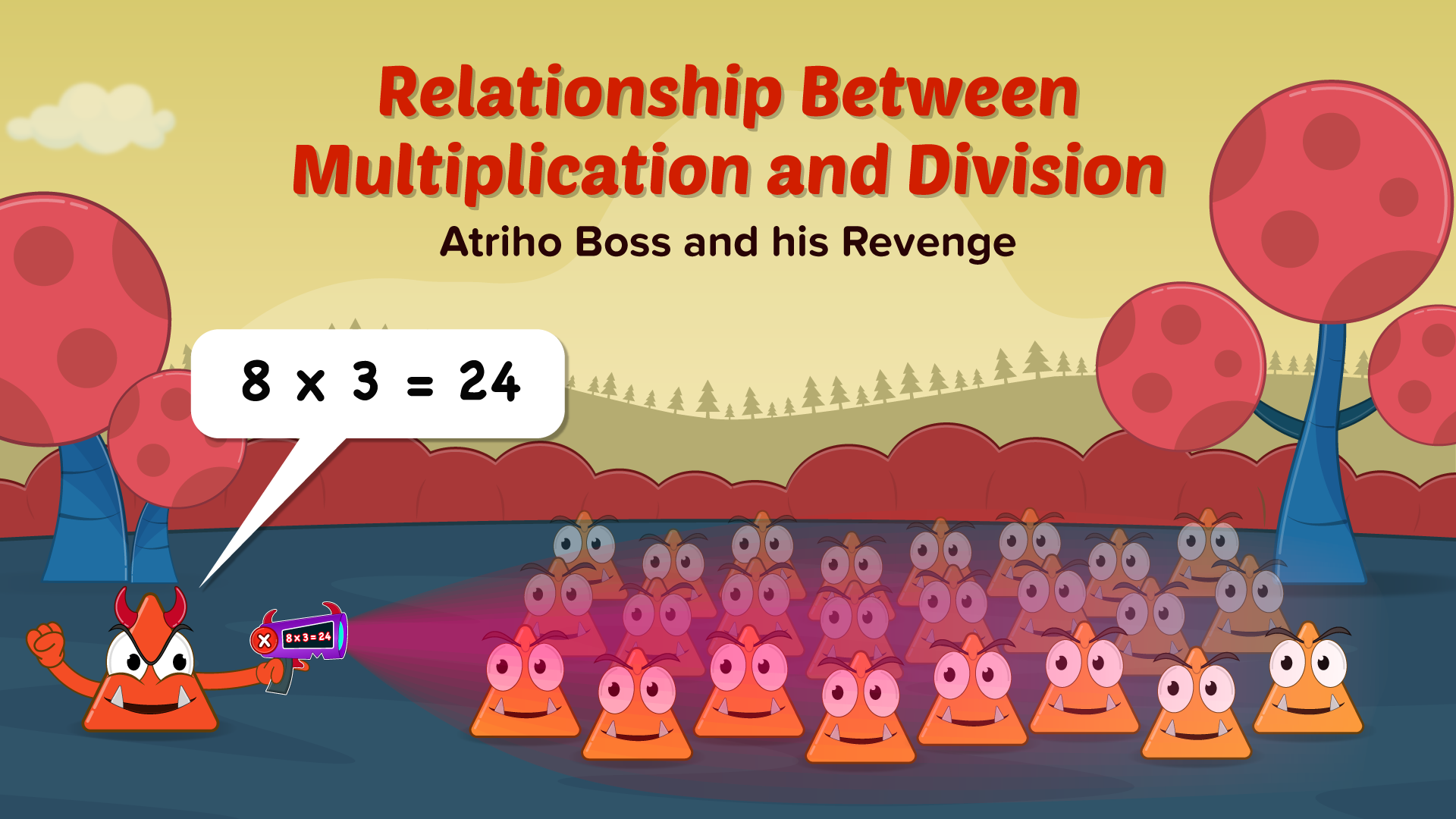
You can start with a simple example: ‘3 × 4 = 12’ means 3 groups of 4 make 12. Now flip it: ‘12 ÷ 4 = 3’ means if you share 12 into groups of 4, you’ll get 3 groups.
Both are true. One builds the total, the other breaks it down.
Try this with your kid using real-life examples :
- You have 5 bags. Each bag has 6 sweets. How many sweets altogether?’ Let them multiply : 5 × 6 = 30.
- Then ask : ‘If you have 30 sweets and want to put 6 in each bag, how many bags will you need?’ Let them divide: 30 ÷ 6 = 5.
- You can also play with missing number questions: ‘Something × 4 = 20. What’s the missing number?’ Guide them to think: ‘20 ÷ 4 = 5, so the missing number is 5.’
Our eBook includes worksheets that gently guide kids through these kinds of problems—step by step, with space to think, draw and talk things through. They are designed for parents to use at home, with no pressure and no jargon—just clear, thoughtful support.

 HAND : A ‘Build and Break’ Game
Powered by hands-on activities from our 3H eBook series
Here’s a simple activity that turns multiplication and division into a playful challenge.
What you’ll need:
- A bowl of small objects—buttons, coins, grapes, anything handy
- A few cards with number stories or problems
How to play:
- Start with a multiplication story: ‘You have 4 plates. Each plate has 3 grapes. How many grapes altogether?’ Let your kid build the groups and count: 4 × 3 = 12.
- Now flip it into a division story: ‘You have 12 grapes. You want to put 3 on each plate. How many plates will you need?’ Let them break the total into equal groups: 12 ÷ 3 = 4.
You can turn it into a little adventure: ‘You’re a chef with 18 cupcakes. You want to pack them into boxes of 6. How many boxes will you need?’ Let them act it out. Let them move the pieces. Let them feel the math.
Our eBook is full of activities like this—easy to set up, fun to play, and designed to help kids learn by doing. Whether it’s building with blocks, sharing snacks, or solving a mystery, every task is rooted in real life and emotional connection.
Takeaway for Parents
Multiplication and division aren’t just math operations—They are partners. One helps us build, the other helps us share. When kids begin to see how they are connected, math becomes less about memorising and more about understanding.
Our 3H-powered eBook brings this idea to life—with stories that feel familiar, worksheets that make sense, and activities that invite kids to explore. It’s not just a resource—it’s a companion for parents who want to make learning feel like home. Let’s help our kids build and break with confidence. One plate, one question, one smile at a time.
