

If you have ever watched your child push a toy across the floor and then try to balance it on top of another, you have already seen the magic of 3D shapes in action. These little experiments — often messy, often noisy — are how kids begin to understand the world around them. And as parents, we are right there, answering questions, wiping up spills, and sometimes learning alongside them.
That is why we created our new ebook for kids aged 8 to 11, built on the 3H approach: Heart, Head and Hand. It is designed to help kids learn through stories, thinking and hands-on play. This blog explores one of the most delightful parts of early geometry — how 3D shapes roll, slide and stack — and how you can explore it together at home.

When we talk about rolling, sliding and stacking, we are really talking about how 3D shapes move and behave.
Rolling: Shapes like spheres and cylinders roll because they have curved surfaces. Think of a football or a tin can.
Sliding: Shapes with flat surfaces, like cubes and rectangular prisms, slide when pushed. A book or a box might glide across the floor.
Stacking: Shapes with flat tops and bottoms can be placed on top of each other. Building blocks are a perfect example.
These are not just words. They are actions your child sees and tries every day.


One morning, my son Caleb was playing with his toy kitchen set. He rolled an orange across the floor and then tried to roll a potato. The orange zipped across the tiles, but the potato wobbled and stopped. He looked up and said, ‘Mumma, this one is a bad roller!’ We laughed, and then talked about how the shape of an object affects how it moves. That chat stayed with him — and with me.
Another time, my daughter Harper was stacking her wooden blocks. She placed a cone on top of a cube and watched it tumble down. She frowned and said, ‘Why does it not stay?’ I explained that cones have curved sides, so they do not stack well. She nodded, picked up a cube, and said, ‘This one is better.’ That moment showed how much kids learn by doing.
And then there was Mason, my nephew, who once tried to slide a football across the kitchen floor. It rolled away instead. He chased after it and said, ‘I wanted it to slide, not run!’ That was a perfect moment to talk about curved surfaces and how they behave differently from flat ones.
Our ebook brings these ideas to life through the 3H approach:
- Heart: We begin with stories and feelings. Kids connect shapes to things they love. A sphere becomes a basketball. A cube becomes a birthday present.
- Head: We help kids think and ask questions. Why does a cylinder roll in one direction but not the other? Why does a cube stack better than a cone?
- Hand: We encourage hands-on play. Kids roll, slide and stack objects around the house. They learn by touching, moving and experimenting.
This way, learning becomes part of everyday life — not something separate or forced.
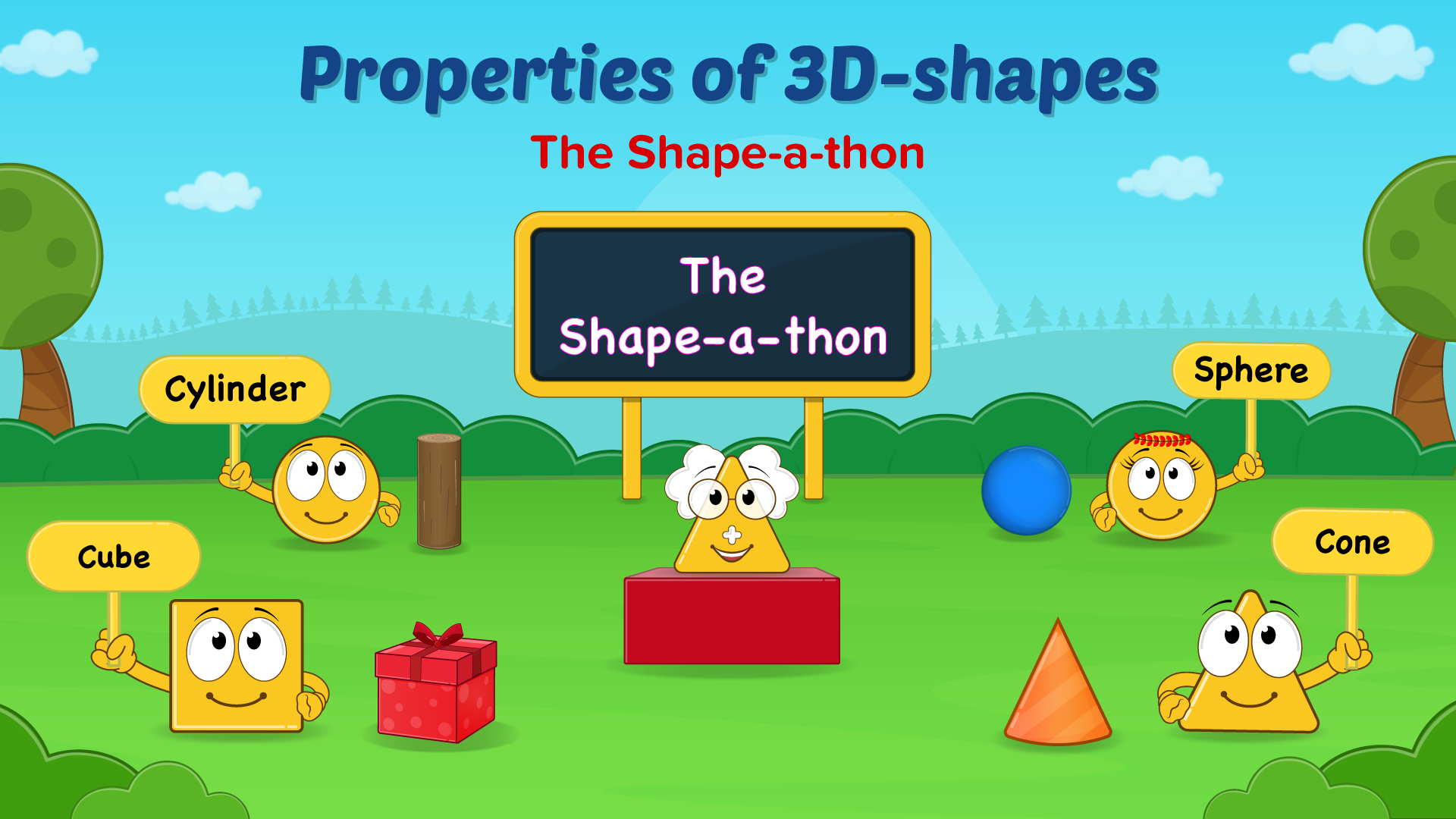
You do not need special tools or lessons to help your child explore these ideas. Your home is full of objects that roll, slide and stack.
- In the kitchen: Let your child roll an apple, slide a biscuit tin, and stack plastic containers.
- During play: Use building blocks, balls and toy cars to explore movement and balance.
- On walks: Talk about how stones roll, how books slide in a bag, and how boxes stack in a shop.
Ask simple questions like, ‘Do you think this will roll?’ or ‘Can we stack these?’ These small conversations help your child notice, think and learn.
One evening, while tidying up, Harper tried to stack her water bottle on top of a book. It slid off. She looked at me and said, ‘It needs a flat bottom, right?’ That was her way of putting it all together — and it made me smile.

We did not just write a book. We created something that feels like a companion — for your child and for you. It is full of stories, activities and gentle challenges that make geometry feel like play.
Whether your child is just starting out or already asking big questions, this ebook meets them where they are and helps them grow.
So if you are looking for a way to make learning more human, more connected and more joyful, this is it.
Let us help our kids see the world not just in shapes, but in possibilities.
Explore our ebook today and see how the 3H approach can turn everyday moments into lifelong learning.
