
It started with a clock.
One evening, while brushing her teeth, my daughter looked up at the wall and asked, ‘Why does it say X instead of ten?’ I paused. That wasn’t just a question; it was an invitation. A quiet push into a world of ancient symbols, forgotten stories, and a kind of math that feels more like solving riddles than doing sums.
If you’re raising a curious six- to eight-year-old, you’ve probably had moments like this. Roman numerals show up in places we barely notice : on clocks, in books, on buildings, even at the end of movies. And when kids spot them, they are not just learning numbers. They are connecting dots across time. They are asking questions that open doors.
At Uncle Math Lab, we believe learning should feel like discovery. That’s why our eBooks are built around the 3H approach of Heart, Head, and Hand. It’s not about memorising facts. It’s about helping kids feel something, think deeply, and experience learning with their whole selves. Roman numerals are a beautiful way to bring this to life.

 HEART : Let Roman Numerals Tell Stories
Roman numerals aren’t just numbers. They are letters that once built empires, marked kings’ reigns, and counted years long before calculators existed. They carry history in their curves and corners.
One afternoon, my son was watching a cartoon where a Roman soldier shouted, ‘I am Marcus the Brave, born in the year MCMXCV!’ He turned to me and said, ‘That’s not a year, that’s a puzzle!’ So we sat together and cracked it. M is 1000, CM is 900, XC is 90, and V is 5. ‘So he was born in 1995?’ he asked, eyes wide.
That wasn’t just math—it was time travel.
When kids learn Roman numerals through stories, whether it’s gladiators, ancient scrolls, or secret treasure maps, They are not memorising. They are imagining. And that’s where the magic begins.

 HEAD : Understanding Through Simple Logic
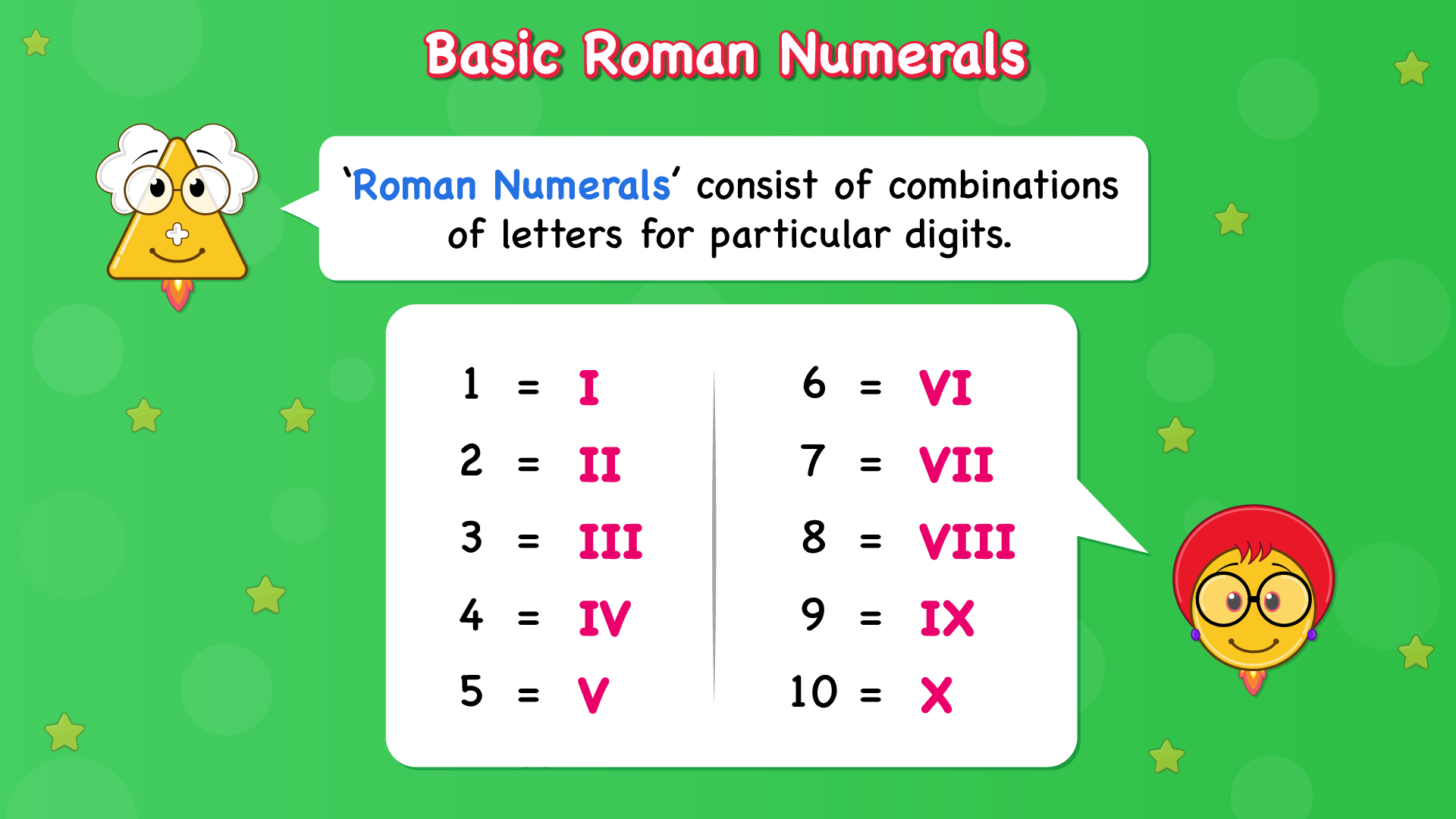
Roman numerals follow rules, and kids love rules they can twist and play with.

But here’s the clever part : sometimes you add, sometimes you subtract.
My daughter once asked, ‘Why is IV four and not six?‘ That led to a chat about how putting a smaller numeral before a bigger one means you take away. She started spotting patterns everywhere. ‘So IX is nine, and XL is forty?‘ she said. ‘It’s like a secret code!’
These kinds of questions build reasoning. They help kids think about structure, logic, and exceptions. It’s not just about knowing what X means; it’s about understanding why IX is different from XI. That’s the kind of thinking that stays with them.
 HAND : Let Them Build, Trace, and Play
Roman numerals come alive when kids use their hands. One rainy afternoon, we turned the house into a Roman numeral scavenger hunt. Clocks, books, even the TV remote had clues. My son traced numerals in flour on the kitchen counter. My daughter built them with matchsticks. Learning became a game. And games stick.
Here are a few simple ways to bring Roman numerals into your home:
- Cut out shapes from coloured paper and make a ‘Shape Parade’ on the fridge.
- Use straws and tape to build triangle towers and hexagon huts.
- Draw shapes with chalk on the pavement and turn them into animals, robots or treasure maps.
When kids touch, trace, and build, they are not just learning—They are making memories.

A Final Word to Parents
You don’t need to be a historian to teach Roman numerals. You just need to notice them, talk about them, and let your kid lead the way. When your kid asks, ‘Why does the movie say Part II instead of Part 2?’ lean in. That’s not just curiosity—it’s learning in motion.
At Uncle Math Lab, our eBooks are designed to support this kind of learning—rooted in global curricula and powered by the 3H approach. We believe that when kids learn with Heart, Head, and Hand, they don’t just understand Roman numerals—they begin to see the world differently.
So next time you spot a Roman numeral carved into a building or printed on a book spine, pause. That’s not just a number. That’s a story waiting to be told. And your kid is ready to hear it.

