
If you’ve ever seen your kid arrange building blocks from smallest to tallest or stack cups from big to small, they’ve already started exploring ascending and descending order without even knowing it.
Let’s explore what ascending and descending order means for young learners and how we can teach it with warmth, logic, and hands-on fun.
What Is Ascending and Descending Order?
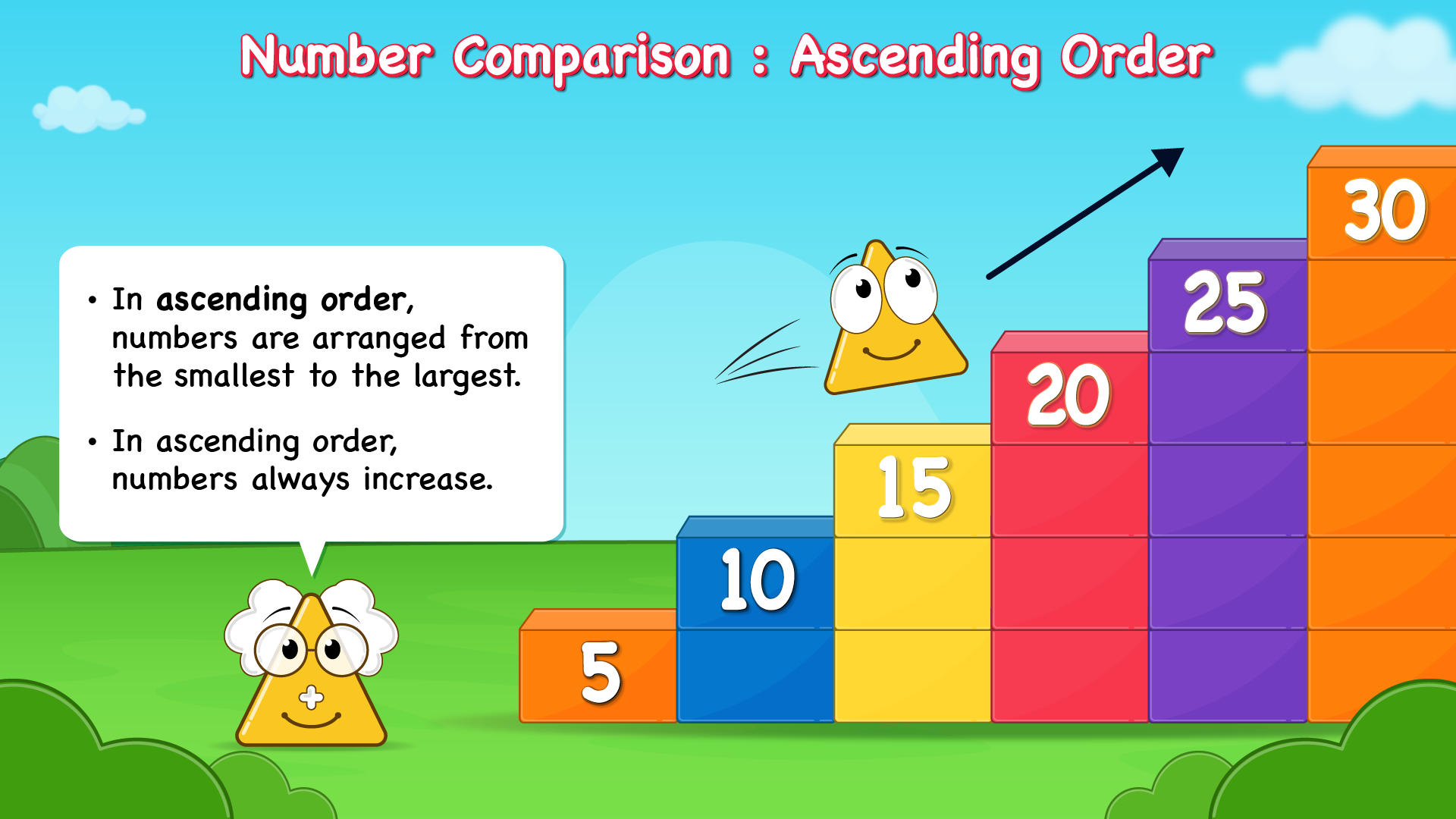
Ascending order means arranging numbers from smallest to largest—like climbing up the stairs.
Descending order means arranging numbers from largest to smallest—like sliding down a slide.
For example:
- 1, 2, 3, 4, 5 is ascending order.
- 5, 4, 3, 2, 1 is descending order.
For kids aged 3 to 6, these concepts are best learned through comparison and play. Understanding number order helps them:
- Recognise patterns in numbers
- Prepare for addition and subtraction
- Develop logical thinking
- Feel confident when counting forward or backward
And most importantly, it helps them build a strong foundation for future math.

How the 3H Approach Makes It Click
Our comic books use the 3H Approach—a teaching method that speaks to a kid’s heart, challenges their thinking, and invites them to learn through movement and activity. Here’s how we apply it to ascending and descending order.
 HEART : Stories that Spark Curiosity
Kids connect deeply with characters, emotions, and stories that reflect their world. That’s why we start with relatable tales that show number order in action.
In one of our comic book stories, the characters are rebuilding the office damaged by Uncle Bad’s robots and, in a way, discover the pattern of ascending and descending on the stairs.
These story moments do more than introduce math; they help kids feel excited, curious, and emotionally involved. The story serves as a bridge to the concept, making the learning meaningful.

Tell a story during playtime. “Let’s help the ladybug climb from leaf number 1 to leaf number 5. Oh no, now she’s sliding back down!”
 HEAD : Understanding Through Simple Logic
Once your kid is engaged with the idea, it’s time to help them understand what’s happening.
Our comic books use clear visuals and everyday situations like lining up toys, arranging height charts, or sorting blocks to explain how numbers go up or down. Kids begin to see :
- What number comes next?
- What number comes before?
- How to compare sizes and values?
These patterns help them build a strong mental number line and prepare for counting, measuring, and even solving problems.
Arrange the number cards out of order and ask, “Can we put these in order from smallest to biggest?” Let your kid think it through and explain.
 HAND : Learning by Moving and Doing
At this age, kids learn best by using their hands, their voices, and their whole bodies. That’s why our comic book activities include :
- Stacking cups in size order
- Creating number ladders with flashcards
- Building stairs with blocks numbered 1 to 5
- Dancing and counting steps up and down
These actions help kids feel the flow of numbers, not just hear it. They begin to understand that numbers move in a direction—and that they can move with them.

Create a “number staircase” with paper on the floor. Let your kid step on each number going up, then turn and step down, counting backwards. It’s simple, fun, and powerful.
Why This Matters?
Learning to arrange numbers in order is more than just a counting exercise. It helps kids:
- Build number awareness
- Recognise how numbers relate to each other
- Develop memory, sequencing, and problem-solving skills
But most of all, it helps them feel confident. They begin to see numbers not as isolated facts but as friends walking in line, each with a place and pattern.
With the 3H approach, your kid learns in a way that feels personal, logical, and joyful.
What Makes Our Comic Books Different?
Our math comic book series is built for real kids with real curiosity. Each page combines:
- Relatable characters and meaningful stories (❤️ Heart)
- Playful, hands-on activities that reinforce learning (✋ Hand)
- Simple concepts and clear thinking strategies (🧠 Head)
We’re not just teaching what ascending or descending means—we’re helping kids live it, feel it, and love it.
Ready to Start the Climb?
If your kid is between 3 and 6, there’s no better time to explore number order in a way that feels like play—not pressure. With the help of stories, thoughtful activities, and a little imagination, your kid can go from simply counting to understanding how numbers grow and shrink.
Explore our math comic book series today, and give your kid the joy of climbing numbers with confidence, one step at a time.
Because when learning speaks to the heart, engages the head, and involves the hands, it truly lasts.