Still remember the day my daughter came running home from her school’s sports day and said, ‘Mom, I came third in the race!’ She was glowing with pride, not just because she got a medal, but because third meant something to her. It marked her place in a big, exciting event.
That’s what ordinal numbers do. They aren’t just about memorising ‘first, second, third’—they help kids make sense of order, position, and sequence in their daily lives.
As educators and parents, we must remember: learning isn’t just what the kid knows, it’s what the kid feels, understands, and experiences. That’s where our unique 3H approach of Heart ❤️, Hand ✋ and Head 🧠 comes in. This philosophy is at the core of our math comic books and everything we create for early learning.
Let’s take a gentle, real-world approach to teaching ordinal numbers to kids aged 3 to 6, using this deeply human method.

Kids grasp concepts better when they can connect them to their own world. Before introducing terms like ‘first or second’, look for everyday situations where ordinal numbers are naturally used :
At the dinner table : You’re the first to finish your meal!
At school : Let’s line up. Who’s standing second?
During playtime : Your teddy bear is the third in line for the ride!
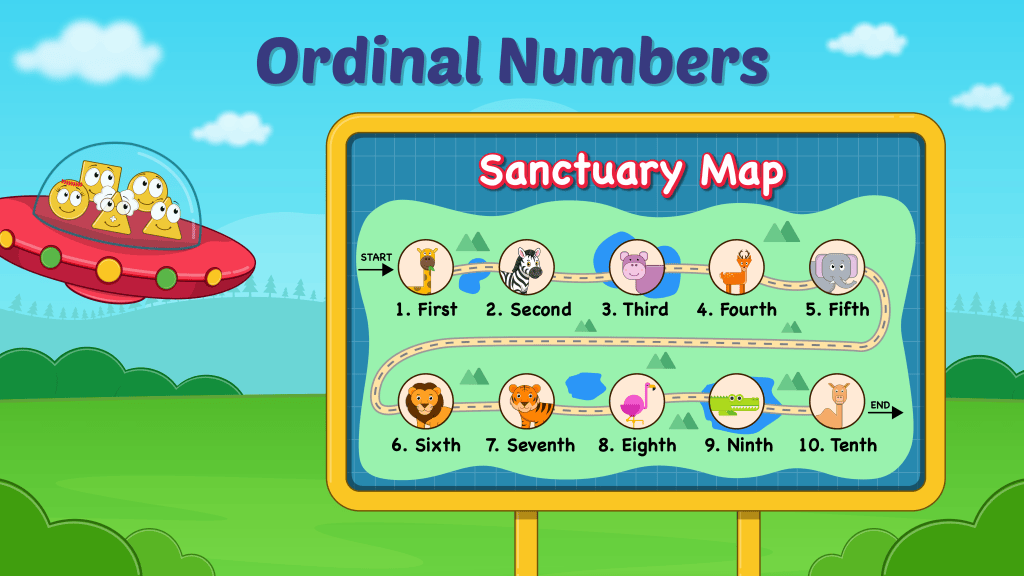
In our math comic books, we bring these moments to life with characters who go to visit a wildlife sanctuary and explore different animals placed at specific positions in a series. When kids read stories that mirror their own joys, frustrations, and daily routines, ordinal numbers become real, not abstract.
The Heart approach reminds us : if a kid feels the number’s meaning in their own life, they are more likely to remember and use it.


Kids are natural explorers. Give them space to touch, move, act, and play with concepts—and learning deepens effortlessly.
Some joyful, hands-on ways to explore ordinal numbers :
Race toy cars and award positions.
Line up shoes or blocks and label them with ordinal numbers.
Create a pretend birthday party with teddies and ask, ‘Who’s the first to eat cake? Who’s the third to sing?’
Our math comic books often include activity pages where kids can cut, paste, colour, and match positions. For example, one task asks them to place different animals on a number track. Learning comes alive through movement and imagination.
The Hand approach reminds us: kids are not just thinkers, they are doers. Let their hands lead their learning.


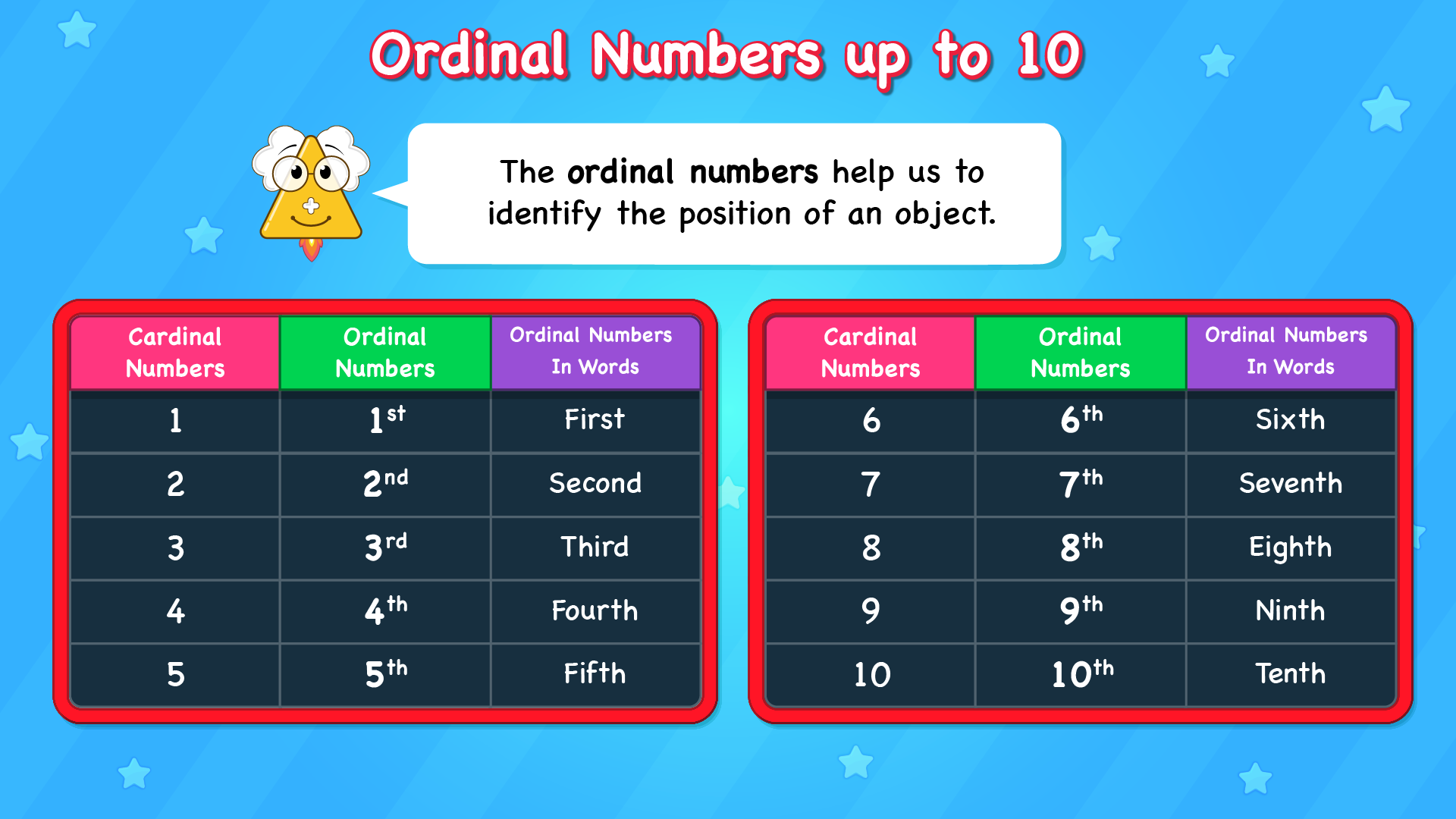
After emotional connection comes clarity. Kids need to understand how ordinal numbers work and how they differ from regular (cardinal) numbers.
Some key ideas to help :
Ordinal numbers show position, not quantity.
Three tells how many apples, but the third tells which apple.
Ordinal numbers follow a sequence.
Help kids see this with number lines or visual stories.
In the Uncle Math comic book, the structured narratives, rich in visuals and situations, help kids internalise the logic of ordering.
- Use a calendar to mark the first day of the week.
- Sort toys in a row and label them ‘1st, 2nd, 3rd…’
- Look at a queue of animals in a storybook and ask, ‘Who is fourth?’
The Head approach creates a mental map—a structured way for the kid to see where and how ordinal numbers live.
Ordinal numbers may seem simple, but they hold powerful learning. They :
- Build sequencing and logic
- Support early reading comprehension (events in order)
- Prepare kids for math operations and real-life instructions
But more than that, when learned with warmth and imagination, they make a kid feel seen. Whether they are first, fifth, or last, they have a place. And they understand it.
At Uncle Math Lab, we’ve spent years crafting math comic books that don’t just teach numbers; they tell their stories. Using the 3H approach of Heart ❤️, Hand ✋ and Head 🧠—we’ve created a gentle world where math isn’t something to fear, but something to live.
So the next time your kid lines up their crayons, or wins a race with their toy truck, ask them :
‘Who was first? Who came second?’
And watch their eyes light up with understanding.
Because learning, when felt and lived, lasts forever.