
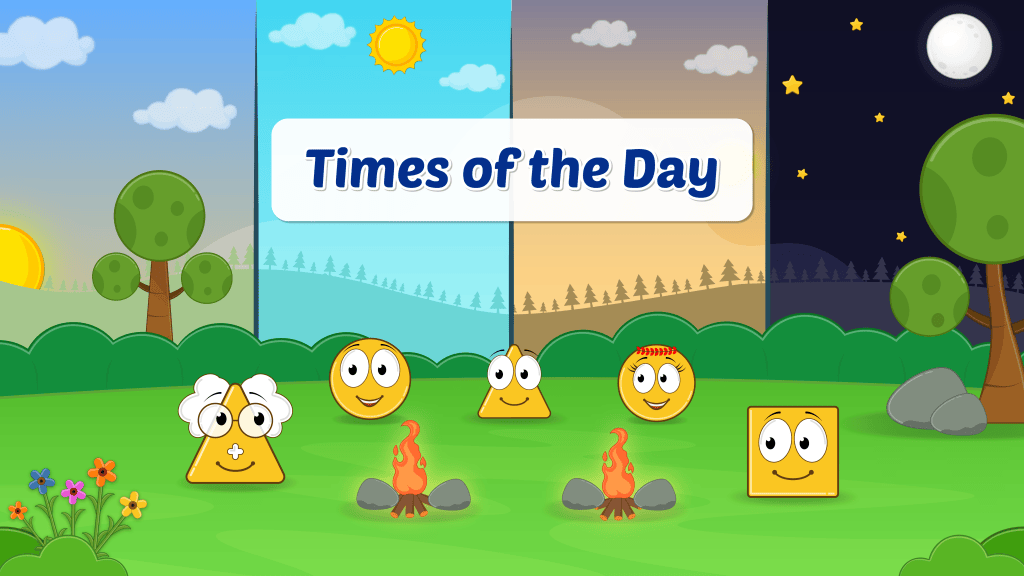
Young kids view the world with an eager curiosity, regularly asking, “What will we do next?” Introducing times of the day—morning, afternoon, evening and night—helps them find comfort and confidence in daily routines. More than just learning to tell time, understanding these moments builds a sense of order, anticipation, and independence.
Why Understanding Times of the Day Matters
For kids aged three to six, making sense of time is about more than clocks or numbers. It’s about connecting each part of the day to the rhythms and activities they experience—like waking up, playing, sharing meals or reading bedtime stories. This understanding lays the foundation for broader math and life concepts, such as sequencing, prediction, and a sense of routine.
At our Uncle Math Lab, we believe deeply in the value of the 3H approach—heart, head and hand. To teach time meaningfully, we rely on engaging stories, gentle explanations, and activities kids can do with their hands.

A Day in the Life: Making Learning Persona
Start by talking about your kid’s day. You might say,
- “Morning is when we open the curtains and feel the sunshine. This is when we have breakfast and get dressed.”
- “Afternoon is when we might visit the playground or sit down for lunch.”
- “Evening comes as the sun goes down, when we have supper and cuddle up for a story.”
- “Nighttime is for sleeping and dreaming, until a new day begins again.”
Stories like these help kids anchor new words to real experiences in their lives.
Bringing Times of the Day to Life
 HEART : Learning Through Stories and Emotions
- Share special rituals for each time—like a morning cuddle, an afternoon snack, or a favourite bedtime story.
- Talk about how each part of the day makes them feel. “Does the morning make you feel excited for new adventures?”

 HAND : Learning by Moving and Doing
- Craft activities: Draw or colour a sun for morning, a clock with hands pointing to 12 for lunchtime, and a moon for night.
- Use a “day wheel”: Make a large circle divided into four parts, with kids gluing in pictures or creating drawings representing their daily activities at the right part of the wheel.
- Play “What comes next?” games, encouraging kids to physically move to different corners of the room for morning, afternoon, evening or night activities.

 HEAD : Understanding Through Simple Logic
- Help them sequence their day with simple questions: “What do we do first after waking up?” “When do we brush our teeth?”
- Introduce visual schedules or picture charts. Let kids match photos or drawings of activities—like eating breakfast, going to school, or taking a bath—into morning, afternoon, evening or night sections.


Simple Everyday Examples
- Morning: Waking up, brushing teeth, breakfast, getting dressed.
- Afternoon: Lunch, playtime, quiet reading, maybe a nap.
- Evening: Supper, family time, getting ready for bed.
- Night: Bathtime, bedtime stories, sleep.
Encourage your kid to talk about their favourite part of each day. This builds a positive attitude towards routines and a sense of control over their world.
Final Thought
Helping kids understand the times of the day is a gentle and personal journey. It’s about looking forward to what’s coming, remembering what happened before, and learning to enjoy every part of the day. With colourful posters, hands-on games, and thoughtful stories, kids soon find their own rhythm—making “telling time” a memorable adventure. At Uncle Math Lab, we are proud to support you and your kid as you explore every bright and peaceful moment together.

