
Lines are everywhere. In the way the road stretches ahead, in the gentle bend of a river, or even in the pages of a storybook. They may seem simple, but for a young kid, learning about lines is like opening a door to seeing the world with new eyes.
I remember one evening when my daughter was drawing on the living room floor with chalk. She paused, looked up and said, ‘Mumma, this line is sleeping… like me at bedtime!’ That moment stayed with me. I didn’t want her to learn lines as dry geometry terms. I wanted her to feel them, notice them, and see them as part of her world. That’s when I turned to a more meaningful method, the 3H Approach, which speaks to the Heart, Head and Hand. Here’s how we made lines come alive at home.
What are Lines?
Before we picked up a pencil or opened a book, I started by talking about lines, what they are and where we see them.
A line is a path traced by a moving point. It can go in different directions and doesn’t necessarily have a clear start or end. Lines form the basis of almost everything we draw and build.
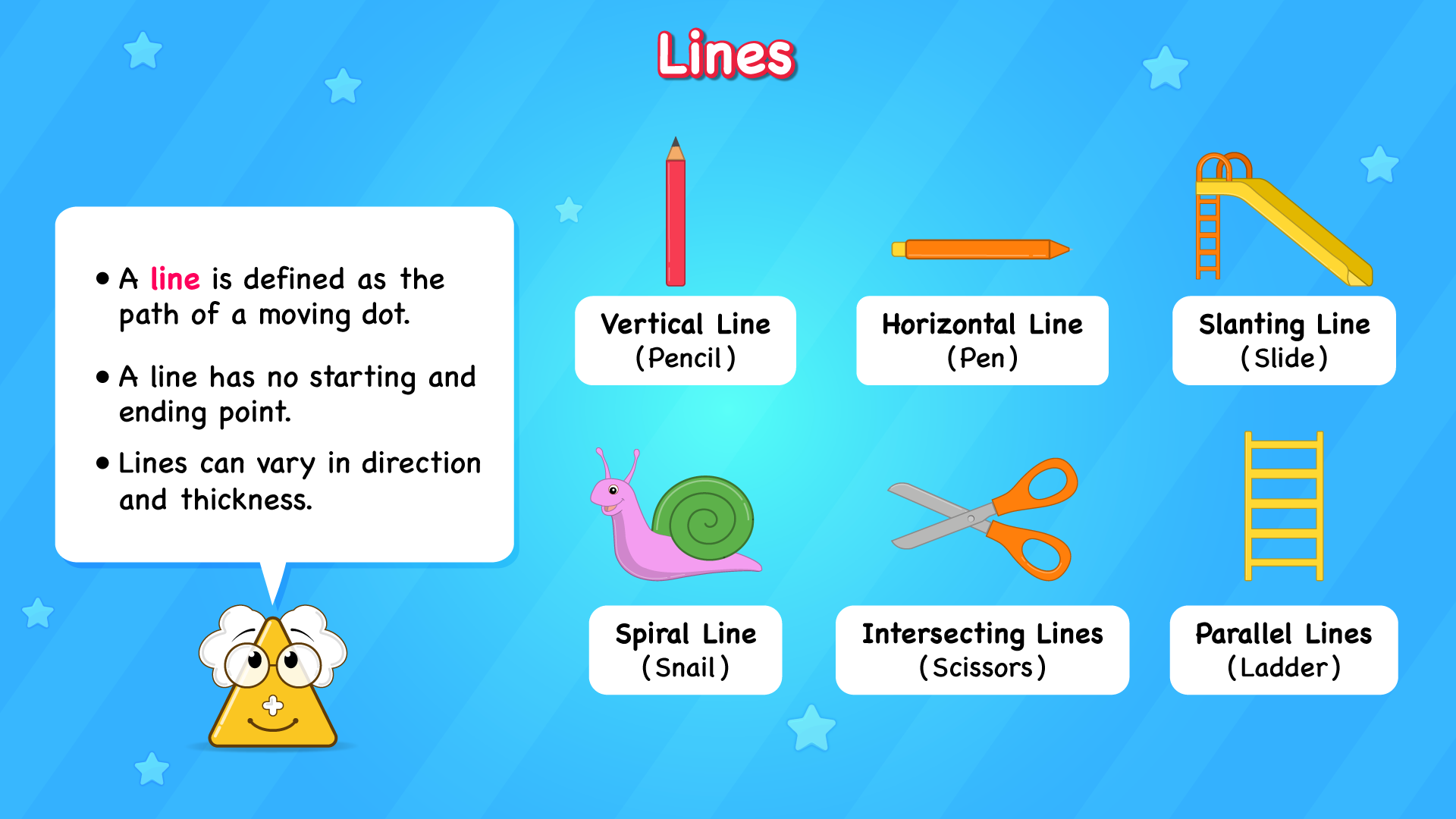
We began spotting lines in everyday things. The clothesline outside, the edge of her storybook, the slide in the park, each one became a little discovery. They come in two broad types :
1. Straight Lines
These are the most familiar and easiest to spot. They can be :
- Vertical (Standing) Lines : Seen in trees, poles, or tall buildings.
- Horizontal (Sleeping) Lines : Found in tables, beds and the horizon.
- Diagonal (Slanting) Lines : Like a slide, a leaning ladder, or a ramp.
- Parallel Lines : These lines never meet like train tracks or notebook lines.
- Zigzag Lines : Sharp turns and points like mountains or the letter M.
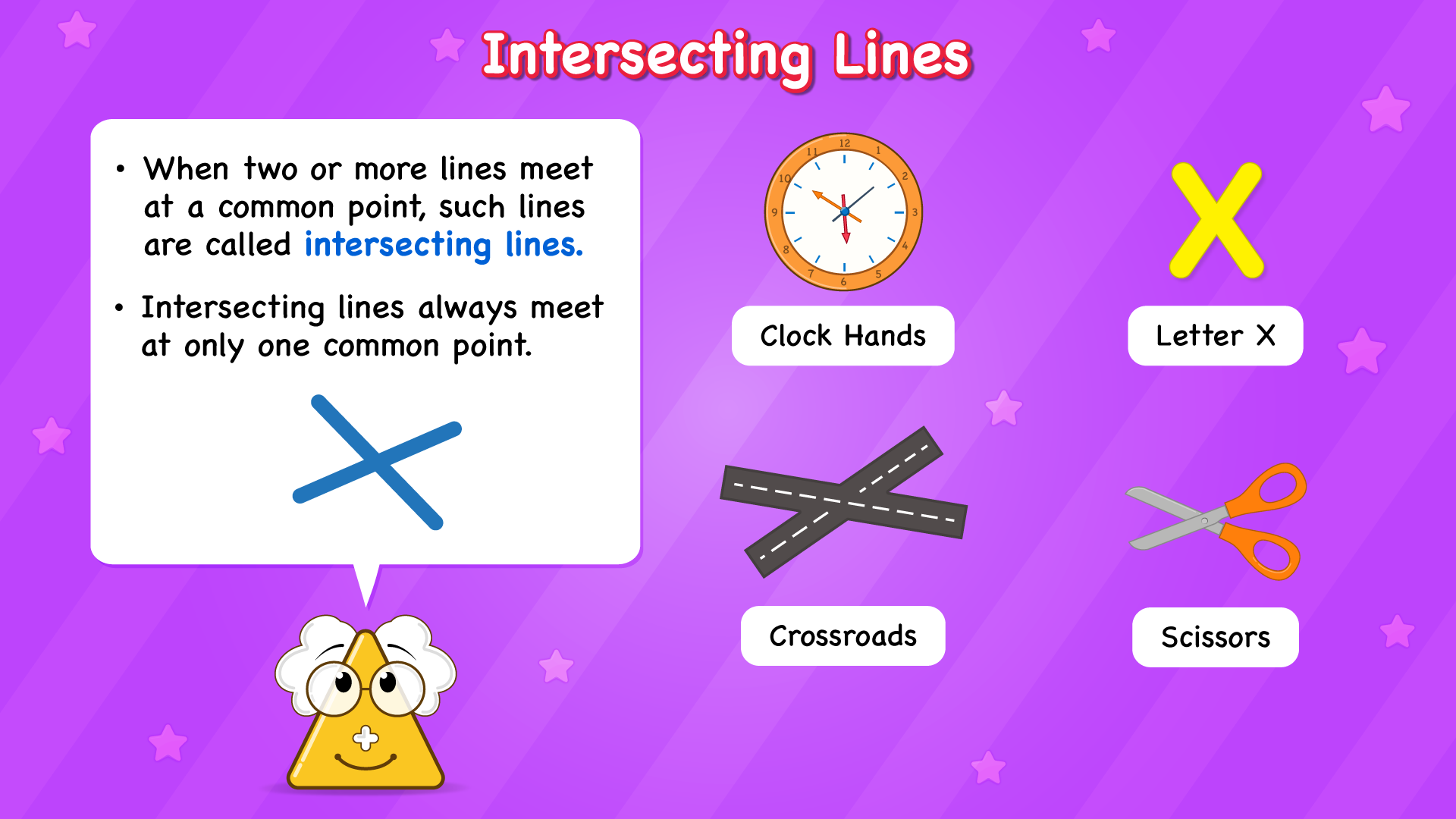
- Intersecting Lines : Lines that cross each other, like the blades of scissors or the letter X.


2. Curved Lines
These lines bend or swirl. They are softer and more flexible than straight lines. They can be :
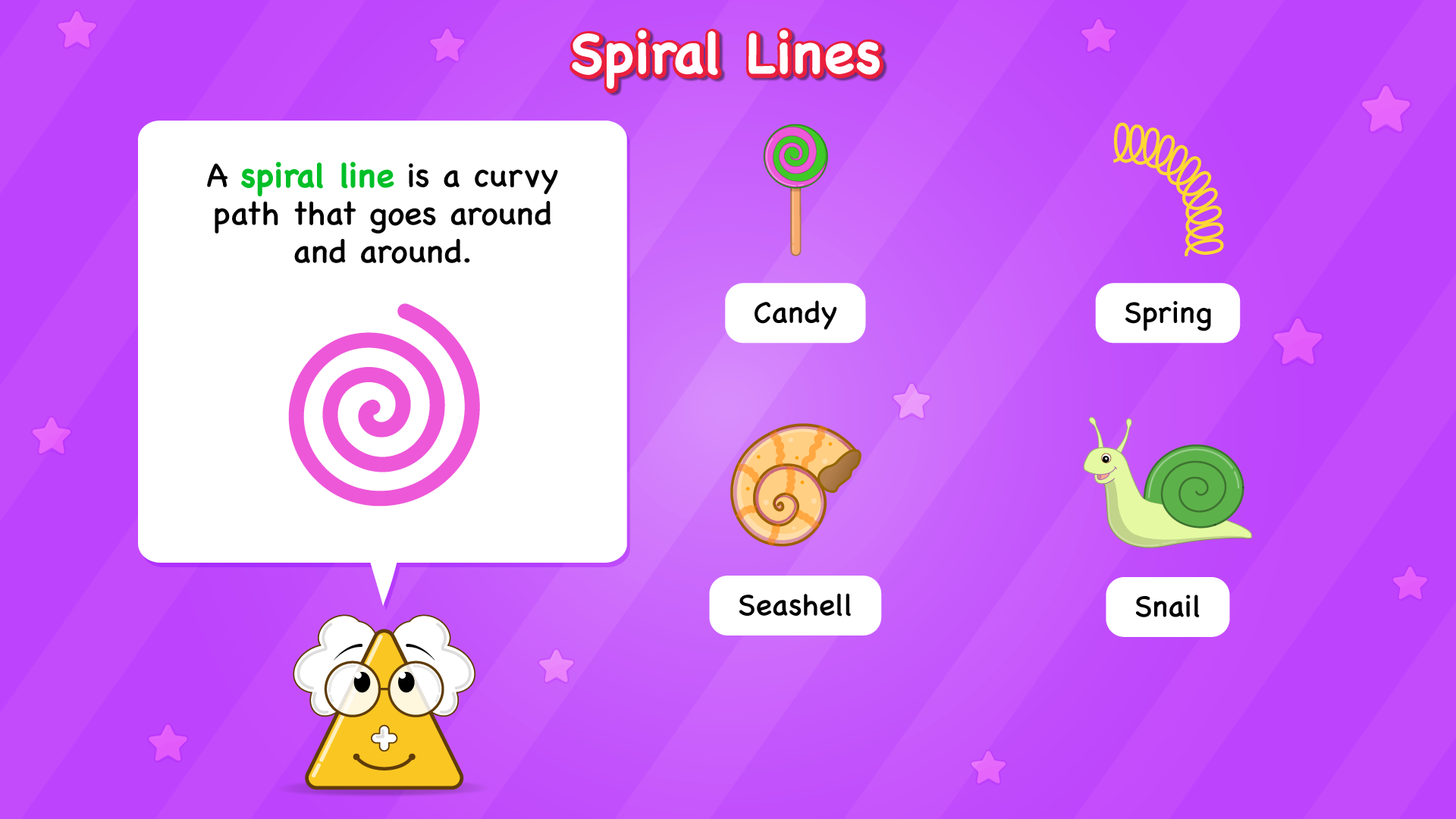
- Spiral Lines : Like a snail shell or a spring.
- Wavy Lines : Like ocean waves or the edges of a cloud.
- Bumpy Lines : Irregular, uneven curves like a rocky path or a crumpled leaf.
How I Taught My Kid with the Heart, Head and Hand Approach
 HEART : Stories That Connect Emotionally
I have always felt that learning should feel personal. So instead of jumping into worksheets, I began with a story. I made up a little adventure where my daughter was a brave explorer helping her daddy find his way home by following different types of lines hidden in everyday places.
I still remember her pretending to walk along a zigzag path made of cushions, saying, ‘This is the mountain line, mumma!’
If creating a story feels tricky, there’s a wonderful companion : Uncle Math Lab’s Math Comic Book, designed especially for kids like mine. Each line became part of the Uncle Math Comic Book, A Night At The Amusement Park, where different types of lines form the major rides of the amusement park. My daughter was hooked not just by the math but by the story.

 HEAD : Understanding Through Simple Logic
We talked about the lines we saw each day. I asked simple questions like :
- ‘What kind of line is your toothbrush?’
- ‘Can you spot a zigzag line in this book?’
One afternoon, while reading a picture book, she pointed to the waves and said, ‘Wavy line!’ It was her own little discovery, and it made her feel clever. Later, we used the worksheets from Uncle Math’s comic book series. They were just the right mix of fun and learning, like matching games, simple challenges and illustrations that made her think without feeling like a test.
 HAND : Learning by Moving and Doing
To make the experience more real, we turned to hands-on play. She used crayons to draw long roads (horizontal lines), made towers with blocks (vertical lines), and bent pipe cleaners into spirals and zigzags.
One rainy afternoon, we took our chalk outside and drew different types of lines across the corridor. She ran along them, tracing each line with her fingers. It was movement and learning all rolled into one. Even bath time became a lesson; she used foam letters to make intersecting and parallel lines on the wall tiles.
Why Uncle Math’s Comic Book Made a Difference
As much as I loved creating my own activities, I knew I needed something consistent and thoughtful to guide us. That’s when I discovered the Math Comic Books by Uncle Math Lab, designed with years of research into how young kids learn best. These books aren’t just about teaching math. They tell rich, playful stories, use visuals that kids connect with instantly and build understanding naturally, without pressure.

Heart : The stories are emotionally engaging. Kids relate to the characters and remember what they feel.
Head : Fun challenges, smart questions and age-appropriate worksheets help build logical understanding.
Hand : Kids get to draw, build, trace and create. It’s not just learning, it’s doing.
Final Thoughts : Turning Simple Lines into Lifelong Learning
In the end, it’s not just about lines. It’s about how kids experience learning.
When we use the heart to connect, the head to understand and the hands to explore, learning becomes natural, joyful and lasting. So, whether you are a parent like me trying to make math come alive at home or an educator looking for the right tools, know that with a little imagination and the right resources, even the simplest of concepts, like lines, can become a powerful and meaningful part. Uncle Math Comic Book might be just what you need.