
Math for little ones isn’t just about numbers; it’s about wonder. It’s the joy of spotting patterns in a row of buttons, counting apples at snack time, or figuring out which toy is heavier. For kids aged 3 to 6, math is everywhere, and it’s magical.
At Uncle Math Lab, early math learning should be playful, meaningful, and full of heart. That’s why our curriculum is built on the 3H approach of Heart (feeling), Head (thinking), and Hand (doing), helping children grow not just smarter, but more confident, curious, and creative.
Why a Global Math Curriculum for Little Learners?
Young children are natural explorers. They learn best when they can touch, feel, imagine, and ask “why?” That’s why we have blended the best teaching ideas from around the world : Common Core (USA), CBSE (India), Cambridge (UK), and Singapore Math to create a curriculum that’s inclusive, flexible, and developmentally rich.
Instead of memorizing facts, kids learn through stories, games, and hands-on activities that connect math to their everyday lives.
Global Math Curriculum
- Spatial Concepts like big/small, tall/short, full/empty, in/out, front/back
- Kids explore these through play — stacking blocks, sorting toys, or playing hide-and-seek
One child said, “My teddy is bigger than my doll, but smaller than my pillow!” That’s spatial reasoning in action.
2. Lines and Shapes
- Types of Lines
- Basic 2D shapes: Circle
- Basic 2D shapes: Square
- Basic 2D shapes: Triangle
- Basic 2D shapes: Rectangle
- Basic 2D shapes: Oval
- Basic 2D shapes: Star
- Basic 2D shapes: Heart
Kids trace shapes with finger paint or build them with clay. Geometry becomes art.
3. Numbers and Counting
- Counting up to 100
- Counting In Tens And Ones
- Skip Counting
- Forward And Backward Counting
- Ordinal Numbers
- Even And Odd Numbers
- Number Names
- Introduction to Place Value : Ones and Tens
“Let’s count how many grapes are in your lunchbox!” Math becomes snack-time fun.
4. Number Comparison
- Number Comparison Using More Or Less
- Number Comparison Using Symbols
- Ascending And Descending Order Of Numbers
5. Addition
- Addition Using Pictures
- Introduction To Addition : Single-digit Addition
“You had 2 apples and your mom gave you 3 more. How many altogether?” That’s addition in action.
6. Subtraction
- Subtraction Using Pictures
- Introduction To Subtraction: Single-digit Subtraction
“You had 5 crayons and gave 2 to your friend. How many are left?” That’s subtraction with empathy.
7. Introduction to Zero
You finished all the candies in the bag and nothing is left. That’s the concept of zero peeping in.
8. Money
- History of Money : Barter System
- Recognizing coins and notes from different countries
- Understanding value and simple transactions
Kids play shopkeeper with play money. Math becomes pretend play.
9. Time and Routine
“What do you do in the morning? What comes after lunch?” Time becomes storytelling.
10. Patterns and Sequencing
- Repeating patterns
- Shape and color patterns
Kids create bead necklaces with repeating colors. Math becomes creativity.
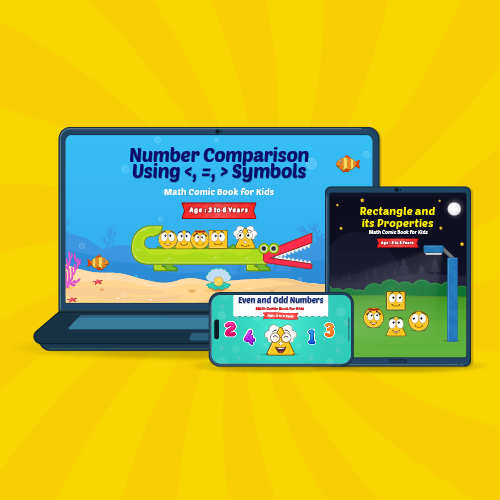


Our 3H method ensures that every child learns in a way that feels natural and joyful. Whether they’re counting stars, building towers, or solving puzzles, math becomes a trusted friend.
For kids aged 3 to 6, math isn’t just a subject — it’s a way of seeing the world. With a global curriculum shaped by the best standards and resources, designed to foster real understanding, every moment becomes a learning opportunity. Ready to make math magical?
Let’s explore together — one story, one shape, one giggle at a time.